Explore All Exams at KGS


All Exams
Explore All Exams at KGS

Khan Sir Courses
Geography I Polity I History | World Map I Indian Map I Economics I Biology

UPSC & State PSC
UPSC I BPSC I UP-PSC I MP-PSC

State Exams
UP I Bihar I MP | Rajasthan

NEET | JEE | CUET
NEET | JEE | CUET

Defence Exams
NDA I CDS I CAPF I AFCAT I SSB I Agniveer

Police Exams
UP SI | Bihar SI | Delhi Police | UP Constable

SSC Exams
CGL I CPO I CHSL I MTS I SSC GD I Delhi Police

Foundation Courses
Physics I Chemistry I Biology I History I Geography I Polity I NCERT I Math I English | Map I Reasoning

Railway Exams
RRB | RPF

Teaching Exams
TET | Teaching | UGC

Banking Exams
SBI | RBI | IBPS

Engineering Exams
Civil | Electrical | Mechanical
UGC NET
UGC NET/JRF
News Highlights provides you with the best compilation of the Daily News Highlights taking place across the globe: National, International, Sports, Science and Technology, Banking, Economy, Agreement, Appointments, Ranks, and Report and General Studies
1.
A day after the protest at Jantar Mantar over the NEET-UG paper leak was called off following Dharmendra Pradhan's resignation as Union Education Minister, Prime Minister Narendra Modi on Sunday announced a high-powered task force on exam reforms led by Infosys co-founder Nandan Nilekani.
2.
"Jeera ki kheti hum karte hain, Unjha toh sirf mandi hai (we cultivate jeera, Unjha is just a market)," says Champa Choudhary.
The 30-year-old is among Rajasthan's many jeera (cumin) and saunf (fennel) farmers aggrieved by the grant of Geographical Indication (GI) tags for 'Unjha Jeera' and 'Unjha Fennel'. The GIs have been registered in the name of the Agriculture Produce Market Committee (APMC) of Unjha, in Gujarat's Mehsana district
3.
The Indus Waters Treaty divides the six rivers of the Indus system, giving India control of the Eastern Rivers (Ravi, Beas, and Sutlej), and Pakistan the Western Rivers (Indus, Jhelum, and Chenab).
4.
Two Chinese mathematicians are among the four to have been awarded this year's Fields Medal, making it one of the rare occasions when more than one person from the same country is on the list.
The Fields Medal is the highest prize in mathematics, considered equivalent to the Nobel, only more selective. It is awarded once every four years, and those under 40 years are eligible.
This is the first time a Chinese national has won. Yu Deng and Hong Wang have been teaching at American universities, where most of their prize-winning work also happened, but they are Chinese nationals and products of Chinese universities.
The other two winners are John Pardon, a US national, and Jacob Tsimerman, a Soviet-born Canadian.
5.
Could the next breakthrough in cancer treatment come from combining artificial intelligence (AI) with quantum computing? Researchers at the Technical University of Denmark (DTU) have taken an early step by using a photonic quantum computer to improve how an Al model designs peptides, which help the body's immune system recognise diseased or infected cells.
A quantum computer differs from a normal or classical computer primarily in the way it is built and operates. While the latter uses bits (basic unit of classical information) that are either 0 or 1, a quantum computer uses qubits (fundamental unit of quantum information) that can be both at the same time. A photonic quantum computer uses individual light particles, or photons, as qubits to encode and process information.
6.
India's Dependence on antibiotics as a convenient cure-all for routine illnesses has reached an inflection point. Aglobal study published in The Lancet Public Health has high-lighted a worrying imbalance in the country's antibiotic use: An over-reliance on stronger medicines even as safer first-line medicines remain underused. The World Health Organisation classifies antibiotics into three categories - "access" drugs, which are recommended as first-line treatments for common infections; "watch" drugs, which are broader-spectrum medicines that should be reserved for specific situations; and "reserve" drugs, intended as a last line of defence against highly resistant infections.
7.
The Reported Saudi-American nuclear cooperation agreement (if it lasts Trump's mood swings) represents a geopolitical inflexion point that exposes the fundamental contradictions at the heart of the current international order-the fragility of strategic partnerships, and the hollow nature of values-based foreign policy in an age of competitive great power interests.
8.
US President Donald Trump on Tuesday (July 21) said that tariffs on generic drugs in the US will be raised 100% after two years and to 200% thereafter to "reshore" generic pharma production in the US, adding that companies deciding against building plants in the US will be "penalised".
9.
Non-life Insurers are pushing for a revision in motor third-party premiums, the first in four years, as losses mount in the segment. Apart from underwriting losses in the Rs 1 lakh crore plus motor segment, the bottom line of insurers was also affected by a recent Supreme Court judgement on the calculation of the economic value of unpaid domestic work done by home-makers, which increased the cost of computing compensation.
10.
The Central Board of Direct Taxes (CBDT) has come out with a 198-page guidance note on crypto-asset reporting obligations in a move that will help in global sharing of information on crypto transactions from next year. The guidance note has been released in line with the crypto asset reporting framework (CARF) outlined by the Organisation for Economic Co-operation and Development (OECD) putting greater onus on crypto exchanges for providing transactional information about crypto assets.
11.
Ten People were killed in rain-triggered floods in China as Typhoon Noul made landfall early Sunday in the southern province of Guangdong.
Noul, the 12th and the strong-est typhoon to hit China so far this year, made landfall at Huizhou city in Guangdong around 3:50 am, bringing gale-force winds and heavy rain to large parts of the region.
12.
World War II's D-Day landing beaches in northern France and the iconic Mount Olympus in Greece were among the sites added to the World Heritage List on Sunday at a U committee meeting in South Korea reviewing dozens of nominations.
The UNESCO committee, which meets in Busan through Wednesday, also inscribed the ancient Japanese capitals of Asuka and Fujiwara and South Sudan's Boma-Badingilo Migratory Landscape, host to one of the world's largest land mammal migrations and the country's first addition to the World Heritage List.
13.
At 72, two cancer patients may appear similar on paper. But one still walks several kilometres every morning, cooks independently and manages his medications without help. The other has diabetes, mild memory problems, has fallen twice in the past year and needs assistance with everyday activities. Yet both receive similar cancer treatment simply because they are the same age although their ability to tolerate surgery or chemotherapy is different. India's first geriatric oncology guidelines say that approach needs to change.
14.
Hepatitis B is a DNA virus that causes chronic but silent viral infection of the liver. In 10 per cent of the infected, hepatitis B can re-main silent-show nosymptoms-yet cause cirrhosis (scarring of the liver), liver failure and liver cancer. Globally, 1.1 million lives were lost due to the infection in 2024-17 per cent more than the numbers in 2015. And, in India, around 29 million people live with the infection. Global estimates show that around 15 to 25 per cent of the infected are likely to die due to delayed diagnosis as well as treatment restrictions as seen in the case of Anand. Only three to five per cent of the infected persons get the antiviral drug.
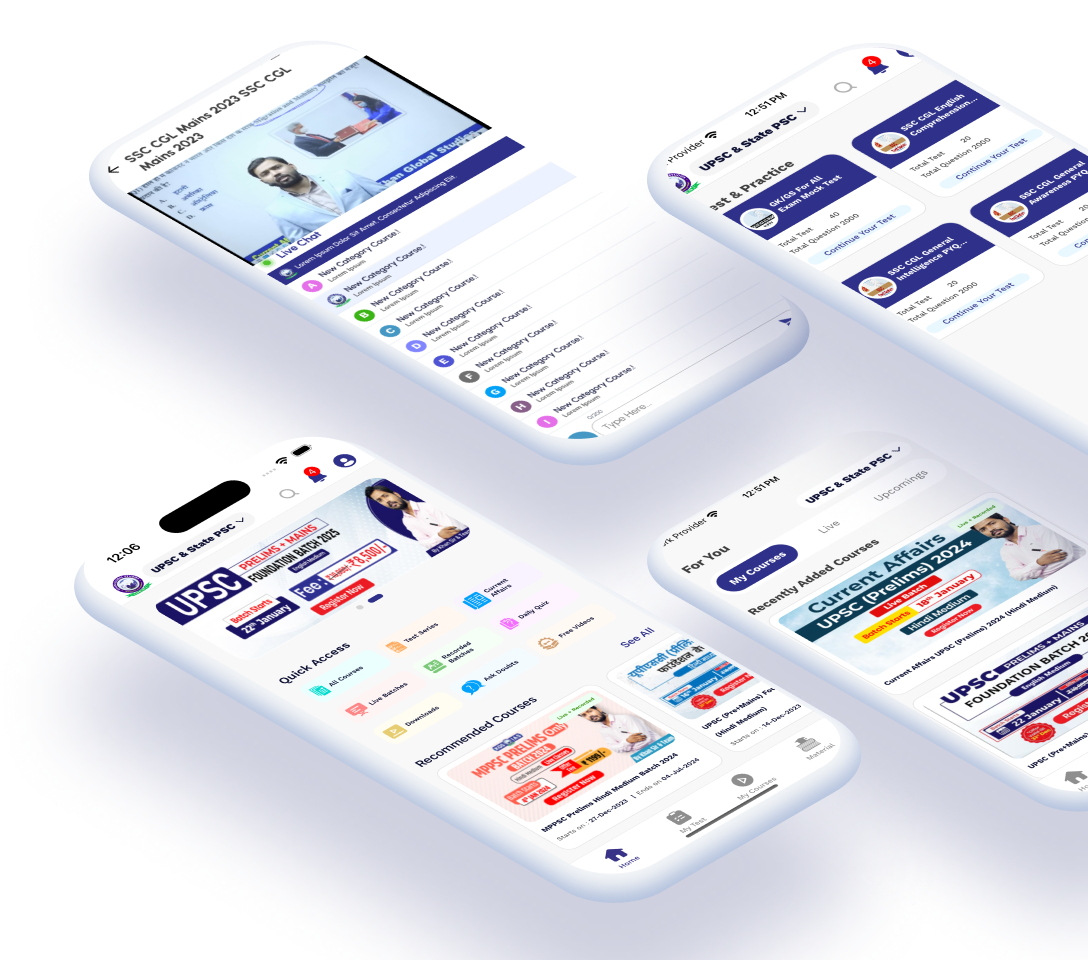
Khan Global Studies App
With our training programs, learning online can be a very exciting experience. Take the next step toward achieving your professional and personal objectives.


Course Related Query:
Ask Your DoubtsStore Related Query:[email protected]NEET | JEE | CUET
NCERT Books
Resources
We love learning. Through our innovative solutions, we encourage ourselves, our teams, and our Students to grow. We welcome and look for diverse perspectives and opinions because they enhance our decisions. We strive to understand the big picture and how we contribute to the company’s objectives. We approach challenges with optimism and harness the power of teamwork to accomplish our goals. These aren’t just pretty words to post on the office wall. This is who we are. It’s how we work. And it’s how we approach every interaction with each other and our Students.
Come with an open mind, hungry to learn, and you’ll experience unmatched personal and professional growth, a world of different backgrounds and perspectives, and the freedom to be you—every day. We strive to build and sustain diverse teams and foster a culture of belonging. Creating an inclusive environment where every students feels welcome, appreciated, and heard gives us something to feel (really) good about.