Explore All Exams at KGS


All Exams
Explore All Exams at KGS

Khan Sir Courses
Geography I Polity I History | World Map I Indian Map I Economics I Biology

UPSC & State PSC
UPSC I BPSC I UP-PSC I MP-PSC

State Exams
UP I Bihar I MP | Rajasthan

NEET | JEE | CUET
NEET | JEE | CUET

Defence Exams
NDA I CDS I CAPF I AFCAT I SSB I Agniveer

Police Exams
UP SI | Bihar SI | Delhi Police | UP Constable

SSC Exams
CGL I CPO I CHSL I MTS I SSC GD I Delhi Police

Foundation Courses
Physics I Chemistry I Biology I History I Geography I Polity I NCERT I Math I English | Map I Reasoning

Railway Exams
RRB | RPF

Teaching Exams
TET | Teaching | UGC

Banking Exams
SBI | RBI | IBPS

Engineering Exams
Civil | Electrical | Mechanical
UGC NET
UGC NET/JRF
Current Affairs provides you with the best compilation of the Daily Current Affairs taking place across the globe: National, International, Sports, Science and Technology, Banking, Economy, Agreement, Appointments, Ranks, and Report and General Studies
Current Affairs
World Rhino Day
Context: World Rhino Day is observed annually on 22 September to celebrate the world’s five rhino species and raise awareness about their conservation.
About World Rhino Day
• Observed on 22 September, World Rhino Day celebrates all five surviving rhino species—Black, White, Greater One-Horned, Sumatran and Javan—and raises awareness about their conservation.
• Origin: The day was first announced by WWF-South Africa in 2010 and became an international campaign encompassing all five rhino species in 2011.
• India’s Initiative: On World Rhino Day 2026, India announced the initiation of Project Rhino.
About Rhinoceros
• Rhinos belong to the family Rhinocerotidae. There are five extant species, comprising three Asian and two African species.
• The Greater One-Horned and Javan rhinos have one horn, while the Sumatran, Black and White rhinos have two horns.
|
Rhino
species |
Scientific
name |
IUCN
status |
Broad
distribution |
|
Greater One-Horned |
Rhinoceros unicornis |
Vulnerable |
India, Nepal |
|
Javan |
Rhinoceros sondaicus |
Critically Endangered |
Indonesia |
|
Sumatran |
Dicerorhinus sumatrensis |
Critically Endangered |
Indonesia |
|
Black |
Diceros bicornis |
Critically Endangered |
Africa |
|
White |
Ceratotherium simum |
Near Threatened |
Africa |
About Greater One-Horned Rhinoceros
• Scientific name: Rhinoceros unicornis. It is the largest of the three Asian rhino species and is found only in India and Nepal. In India, it occurs in Assam, Uttar Pradesh and West Bengal.
• Project Rhino (2026): Initiated to provide financial and technical support to rhino range states for protection, habitat management, genetic improvement and understanding population dynamics.
• Indian Rhino Vision 2020 (IRV2020): Launched in 2005 with the goal of building a 3,000-strong rhino population across seven protected areas in Assam through population management and translocation. The programme subsequently helped establish rhino populations across four protected areas—Kaziranga, Pobitora, Orang and Manas.
• Dudhwa National Park/Tiger Reserve: Greater One-Horned Rhinos were reintroduced in 1984, with the initial animals translocated from Assam; additional rhinos were brought from Nepal in 1985. More recently, rhino reintroduction and free-ranging efforts have continued in Dudhwa.
• Conservation significance: Assam holds nearly 80% of the world’s rhino population, while conservation and reintroduction efforts are also underway in Bihar, West Bengal and Uttar Pradesh.
Birth Anniversary of Rashtrakavi Ramdhari Singh Dinkar
Context: On his 118th birth anniversary, Prime Minister Narendra Modi paid tributes to Rashtrakavi Ramdhari Singh Dinkar, recalling his contribution to Hindi literature and national consciousness.
About Ramdhari Singh Dinkar
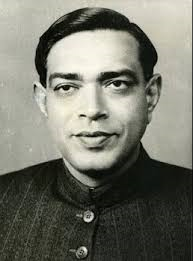
• Born: 23 September 1908, in Simaria village of present-day Begusarai district, Bihar. He emerged as a prominent Hindi poet, essayist and writer, renowned for his powerful and nationalist poetry.
• His writings reflected nationalism, public consciousness, social concerns and cultural identity.
• During the freedom movement, his patriotic poetry became widely popular; he initially supported the revolutionary movement before later being influenced by Gandhian ideals.
• He was nominated to the Rajya Sabha in 1952 and served for 12 years. He also served as Vice-Chancellor of Bhagalpur University and as Hindi Adviser to the Government of India.
Literary Contributions, Awards, Honours and Legacy
• Major works: Renuka, Hunkar, Kurukshetra, Rashmirathi, Urvashi, Parashuram Ki Pratiksha and Sanskriti Ke Char Adhyay, among others.
• Sahitya Akademi Award (1959): Awarded for Sanskriti Ke Char Adhyay, a major work dealing with the evolution of Indian culture.
• Padma Bhushan (1959): Conferred by the Government of India in recognition of his contribution to literature.
• Jnanpith Award (1972): Awarded for Urvashi; Dinkar was the Jnanpith laureate for Hindi for 1972.
• He is popularly remembered as “Rashtrakavi”, and his works—including Rashmirathi, Kurukshetra and Urvashi—continue to hold an enduring place in Hindi literature and India's cultural consciousness.
72nd National Film Awards
Context: The 72nd National Film Awards were presented on 22 September 2026 at Ekta Nagar, Gujarat, recognising excellence in Indian cinema for films certified during 2024.
About National Film Awards
• Instituted in 1954, the National Film Awards are conferred annually by the Ministry of Information and Broadcasting to recognise excellence in Indian cinema. They comprise three sections: Feature Films, Non-Feature Films and Best Writing on Cinema.
• The awards comprise Swarna Kamal and Rajat Kamal, along with prescribed cash prizes. Separate juries evaluate the three sections; the Feature Film section follows a two-tier jury system involving regional and central juries.
• The Dadasaheb Phalke Award, instituted in 1969 and first presented to Devika Rani, it is the highest honour in Indian cinema and recognises outstanding contribution to the growth and development of Indian cinema.
72nd National Film Awards: Key Highlights
• Best Feature Film: Article 370; Best Director: Rajkumar Periasamy for Amaran; Best Debut Film of a Director: Randeep Hooda for Swatantrya Veer Savarkar.
• Best Actor in a Leading Role: Mammootty for Bramayugam and Kartik Aaryan for Chandu Champion (joint award); Best Actress in a Leading Role: Yami Gautam for Article 370.
• Dadasaheb Phalke Award for 2024: Anant Nag was selected for his outstanding contribution to the growth and development of Indian cinema and a cinematic journey spanning over five decades.
• Other notable awards: Bhangaar won Best Non-Feature Film, while Ram-Nami won Best Documentary. Angen, a Santhali film, received the Best Debut Film of a Director (Non-Feature) award.
• The 72nd edition also marked the beginning of the initiative to hold future National Film Awards ceremonies in different States and cities beyond the National Capital, with Ekta Nagar hosting the 2026 ceremony.
Exercise Nomadic Elephant 2026
Context: The 18th edition of Exercise Nomadic Elephant, the India–Mongolia joint military exercise, commenced at Pithoragarh, Uttarakhand, on 21 September 2026.
About Exercise Nomadic Elephant
• Nature: It is an annual, platoon-level bilateral military exercise between the Indian Army and Mongolian Armed Forces, conducted alternately in India and Mongolia. It has been conducted since 2006.
• 2026 Edition: The 18th edition is being conducted at the Foreign Training Node, Pithoragarh, from 21 September to 3 October 2026; the previous edition was held at Ulaanbaatar, Mongolia, in May–June 2025.
• Objective: To enhance the joint military capability of both sides for undertaking Counter-Insurgency Operations in semi-urban and mountainous terrain under a United Nations mandate, while improving interoperability and facilitating exchange of operational best practices.
• The 2026 exercise also incorporates drones and counter-drone systems, alongside tactical-level operations, reflecting the evolving requirements of contemporary military operations.
Khan Global Studies App
With our training programs, learning online can be a very exciting experience. Take the next step toward achieving your professional and personal objectives.


Course Related Query:
Ask Your DoubtsStore Related Query:[email protected]NEET | JEE | CUET
NCERT Books
Resources
We love learning. Through our innovative solutions, we encourage ourselves, our teams, and our Students to grow. We welcome and look for diverse perspectives and opinions because they enhance our decisions. We strive to understand the big picture and how we contribute to the company’s objectives. We approach challenges with optimism and harness the power of teamwork to accomplish our goals. These aren’t just pretty words to post on the office wall. This is who we are. It’s how we work. And it’s how we approach every interaction with each other and our Students.
Come with an open mind, hungry to learn, and you’ll experience unmatched personal and professional growth, a world of different backgrounds and perspectives, and the freedom to be you—every day. We strive to build and sustain diverse teams and foster a culture of belonging. Creating an inclusive environment where every students feels welcome, appreciated, and heard gives us something to feel (really) good about.