You're all caught up—no notifications available.
Explore All Exams at KGS


All Exams
Explore All Exams at KGS

Khan Sir Courses
Geography I Polity I History | World Map I Indian Map I Economics I Biology

UPSC & State PSC
UPSC I BPSC I UP-PSC I MP-PSC

State Exams
UP I Bihar I MP | Rajasthan

NEET | JEE | CUET
NEET | JEE | CUET

Defence Exams
NDA I CDS I CAPF I AFCAT I SSB I Agniveer

Police Exams
UP SI | Bihar SI | Delhi Police | UP Constable

SSC Exams
CGL I CPO I CHSL I MTS I SSC GD I Delhi Police

Foundation Courses
Physics I Chemistry I Biology I History I Geography I Polity I NCERT I Math I English | Map I Reasoning

Railway Exams
RRB | RPF

Teaching Exams
TET | Teaching | UGC

Banking Exams
SBI | RBI | IBPS

Engineering Exams
Civil | Electrical | Mechanical
UGC NET
UGC NET/JRF
Current Affairs provides you with the best compilation of the Daily Current Affairs taking place across the globe: National, International, Sports, Science and Technology, Banking, Economy, Agreement, Appointments, Ranks, and Report and General Studies

SYLLABUS
GS-3: Conservation, environmental pollution and degradation, environmental impact assessment.
Context: A new interim update of the State of the World’s Migratory Species report has warned that 49% of migratory wildlife populations protected under the Convention on the Conservation of Migratory Species of Wild Animals (CMS) are declining, with 24% of species now facing extinction risk globally.
About the Report
• The interim report updates the landmark 2024 State of the World’s Migratory Species, the first comprehensive global assessment of migratory wildlife.
• It evaluates trends among 1,189 species listed under CMS, drawing primarily on data from the International Union for Conservation of Nature (IUCN) Red List of Threatened Species, scientific literature, and updated population assessments.
• The analysis reviewed 386 CMS-listed species that were reassessed since the previous evaluation, excluding species newly listed at CMS COP14.
• Findings will be presented at the 15th Conference of the Parties (COP15) to CMS, scheduled to be held in Campo Grande, Brazil (23–29 March).

Key Findings of the Report
• Large Share of Migratory Species in Decline: 49% of CMS-listed species (about 582–592 species) show declining population trends.
• Rising Extinction Risk: 24% of CMS-listed species (284 species) are now classified as globally threatened under the IUCN Red List.
• Among 386 reassessed species, 26 species shifted to a more threatened category and 7 species moved to a less threatened category.
• Migratory Shorebirds Facing Severe Declines: 18 of the 26 species that moved to a higher extinction risk category are migratory shorebirds.
• Emerging Disease Threat: Highly Pathogenic Avian Influenza (HPAI) H5N1 has emerged as a major threat to migratory wildlife worldwide.
• Key Drivers of Decline: The report identifies several major pressures affecting migratory wildlife:
Example: Mongolian Gazelle mobility declined significantly between 2002 and 2021 due to increasing infrastructure and traffic.
• Significant Declines in Certain Species: Mara–Loita Blue Wildebeest populations have declined by about 75% since the late 1970s due to land-use changes.
• Positive Conservation Success Stories: Despite widespread decline, some species show significant recovery due to conservation efforts:
• Ecological Importance of Migratory Species: Migratory species play a vital role in maintaining ecological balance and supporting ecosystem functioning.
Sources:
Down to Earth
Indian Express
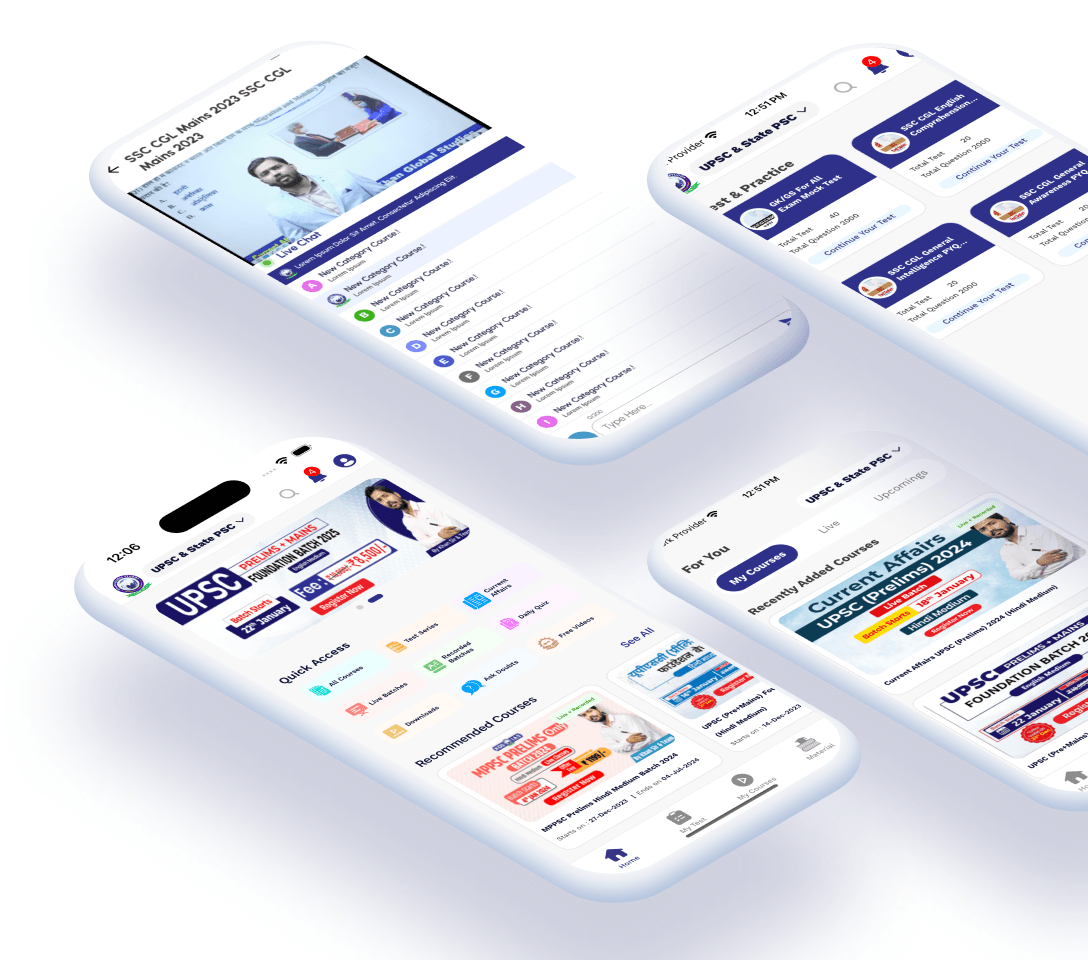
The most trusted learning platform on your phone
With our training programs, learning online can be a very exciting experience! Take the next step toward achieving your professional and personal objectives



Course Related Query:
Ask Your DoubtsStore Related Query:[email protected]NCERT Books
Resources
We love learning. Through our innovative solutions, we encourage ourselves, our teams, and our Students to grow. We welcome and look for diverse perspectives and opinions because they enhance our decisions. We strive to understand the big picture and how we contribute to the company’s objectives. We approach challenges with optimism and harness the power of teamwork to accomplish our goals. These aren’t just pretty words to post on the office wall. This is who we are. It’s how we work. And it’s how we approach every interaction with each other and our Students.
Come with an open mind, hungry to learn, and you’ll experience unmatched personal and professional growth, a world of different backgrounds and perspectives, and the freedom to be you—every day. We strive to build and sustain diverse teams and foster a culture of belonging. Creating an inclusive environment where every students feels welcome, appreciated, and heard gives us something to feel (really) good about.
Get Free academic Counseling & Course Details