You're all caught up—no notifications available.
Explore All Exams at KGS


All Exams
Explore All Exams at KGS

Khan Sir Courses
Geography I Polity I History | World Map I Indian Map I Economics I Biology

UPSC & State PSC
UPSC I BPSC I UP-PSC I MP-PSC

State Exams
UP I Bihar I MP | Rajasthan

NEET | JEE | CUET
NEET | JEE | CUET

Defence Exams
NDA I CDS I CAPF I AFCAT I SSB I Agniveer

Police Exams
UP SI | Bihar SI | Delhi Police | UP Constable

SSC Exams
CGL I CPO I CHSL I MTS I SSC GD I Delhi Police

Foundation Courses
Physics I Chemistry I Biology I History I Geography I Polity I NCERT I Math I English | Map I Reasoning

Railway Exams
RRB | RPF

Teaching Exams
TET | Teaching | UGC

Banking Exams
SBI | RBI | IBPS

Engineering Exams
Civil | Electrical | Mechanical
UGC NET
UGC NET/JRF
Current Affairs provides you with the best compilation of the Daily Current Affairs taking place across the globe: National, International, Sports, Science and Technology, Banking, Economy, Agreement, Appointments, Ranks, and Report and General Studies

SYLLABUS
GS- 1: Indian Culture - Salient aspects of Art Forms, Literature and Architecture from ancient to modern times.
GS-4: Human Values – lessons from the lives and teachings of great leaders, reformers and administrators
Context: On 21 April 2026, the Prime Minister of India, paid homage to Adi Shankaracharya on the occasion of his Jayanti, recognising him as one of India’s greatest spiritual luminaries.
• This is 1238th birth anniversary of Adi Shankaracharya.
About Adi Shankaracharya (approx. 788–820 CE):
• Adi Shankaracharya was born in Kalady, a village in the present Ernakulam district of Kerala state in India on the Vaisakha Shukla Panchami day of the Hindu calendar.
• His father was Shivaguru and mother Aryamba.
• At the age of 8 years, he took sanyasa under the guidance of Govinda Bhagavatpada.
• He mastered and wrote commentaries on the Prasthanatrayi Shastras, establishing himself as a profound scholar early in life.
• By the age of 16, he had already achieved significant philosophical accomplishments.
Philosophical Contributions: Advaita Vedanta
• Adi Shankaracharya’s central contribution lies in systematising Advaita Vedanta, a doctrine of non-dualism:
• His philosophy is encapsulated in the formulation:“Brahma satyam, jagan mithya, jivo brahmaiva naaparah.”
Debates
• He defeated Buddhist scholars in philosophical debates, reasserting the foundations of Sanatana Dharma.
• He also defeated scholars like Mandana Mishra and made them his disciples.
• His deep understanding and interpretation of shastras strengthened the intellectual framework of dharma.
Revival and Propagation of Sanatana Dharma
• He preached and propagated Vedic Sanatana Dharma widely.
• He revived a society that had fallen into decline and restored spiritual awareness.
• He contributed to the renovation of temples and strengthening of religious institutions.
Four Peethas Established by Adi Shankaracharya
|
Direction |
Peetha (Matha) |
Location |
Associated Veda |
|
East |
Govardhana Peetha |
Puri |
Rig Veda |
|
South |
Sharada Peetha |
Sringeri, Karnataka |
Yajur Veda |
|
West |
Dwaraka Peetha |
Dwaraka, Gujarat |
Sama Veda |
|
North |
Jyotirmath |
Badarinath |
Atharva Veda |
• He also appointed his disciples Padmapada, Hasthamalaka, Sureshwara and Totaka as the Shankaracharyas of the four Peethas in East, south, west and north respectively.
Organisation and Social Integration
• Adi Shankaracharya also organised his disciples into ten categories—vana, parvata, aranya, tirtha, ashrama, giri, puri, bharati, sagar, and saraswati.
o These sanyasis were entrusted with the task of propagating dharmic values across regions.
o His efforts contributed significantly to the spiritual and cultural unity of Bharat, despite diversity and limited communication.
Legacy and Relevance Today
• Philosophical Legacy
• Diverse Interpretations
• Debates on Social Thought
• Contemporary Relevance
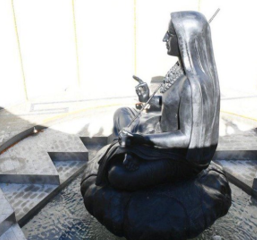
• Statue of Oneness
The statue depicts the philosopher as a 12-year-old child, symbolising the age at which he is believed to have visited Omkareshwar and begun his intellectual journey.

Atal Pension Yojana (APY) Crosses Historic Milestone
Adi Shankaracharya Jayanti 2026

The most trusted learning platform on your phone
With our training programs, learning online can be a very exciting experience! Take the next step toward achieving your professional and personal objectives


Course Related Query:
Ask Your DoubtsStore Related Query:[email protected]NCERT Books
Resources
We love learning. Through our innovative solutions, we encourage ourselves, our teams, and our Students to grow. We welcome and look for diverse perspectives and opinions because they enhance our decisions. We strive to understand the big picture and how we contribute to the company’s objectives. We approach challenges with optimism and harness the power of teamwork to accomplish our goals. These aren’t just pretty words to post on the office wall. This is who we are. It’s how we work. And it’s how we approach every interaction with each other and our Students.
Come with an open mind, hungry to learn, and you’ll experience unmatched personal and professional growth, a world of different backgrounds and perspectives, and the freedom to be you—every day. We strive to build and sustain diverse teams and foster a culture of belonging. Creating an inclusive environment where every students feels welcome, appreciated, and heard gives us something to feel (really) good about.
Get Free academic Counseling & Course Details