You're all caught up—no notifications available.
Explore All Exams at KGS


All Exams
Explore All Exams at KGS

Khan Sir Courses
Geography I Polity I History | World Map I Indian Map I Economics I Biology

UPSC & State PSC
UPSC I BPSC I UP-PSC I MP-PSC

State Exams
UP I Bihar I MP | Rajasthan

NEET | JEE | CUET
NEET | JEE | CUET

Defence Exams
NDA I CDS I CAPF I AFCAT I SSB I Agniveer

Police Exams
UP SI | Bihar SI | Delhi Police | UP Constable

SSC Exams
CGL I CPO I CHSL I MTS I SSC GD I Delhi Police

Foundation Courses
Physics I Chemistry I Biology I History I Geography I Polity I NCERT I Math I English | Map I Reasoning

Railway Exams
RRB | RPF

Teaching Exams
TET | Teaching | UGC

Banking Exams
SBI | RBI | IBPS

Engineering Exams
Civil | Electrical | Mechanical
UGC NET
UGC NET/JRF
Current Affairs provides you with the best compilation of the Daily Current Affairs taking place across the globe: National, International, Sports, Science and Technology, Banking, Economy, Agreement, Appointments, Ranks, and Report and General Studies

SYLLABUS
GS 2: Government Policies and Interventions for Development in Various Sectors;
GS 3: Indian Economy and issues relating to Planning, Mobilization of Resources, Growth, Development and Employment.
Context: The Corporate Laws (Amendment) Bill, 2026, has been referred to a Joint Parliamentary Committee (JPC) after being introduced in the Lok Sabha.
About the Bill
• The JPC will comprise members from both Houses of Parliament, 21 members from the Lok Sabha (nominated by the Speaker) and 10 members from the Rajya Sabha (appointed by the Chairperson), for detailed analysis and recommendations.
• The Bill seeks to amend the Limited Liability Partnership Act, 2008, and the Companies Act, 2013, to align both with modern business practices.
• Objectives of the Bill:
Key Provisions of the Bill
• Decriminalisation of Corporate Lapses: The Bill reclassifies minor procedural defaults from criminal offences to civil violations, making them subject to monetary penalties through an In-House Adjudication Mechanism (IAM).
• Corporate Social Responsibility (CSR) Reforms:
• Digital Governance:
• Provision for Trust Conversion: The Bill allows specified regulated trusts and fund structures (such as those registered with SEBI or operating in IFSCs) to convert into LLPs or similar body‑corporate forms, thereby improving structural flexibility and regulatory clarity for investment entities.
• Operational Flexibility in IFSCs: Companies and LLPs operating in International Financial Services Centres (IFSCs) are allowed to conduct transactions and maintain their books of accounts in specified foreign currencies, thereby facilitating greater operational flexibility.
• Share Buyback Policy: Specified companies may undertake two share buybacks per financial year, with a minimum six-month gap, as against the earlier limit of one.
Significance of the Bill
• Structural Reform in Corporate Regulation: By amending the Companies Act, 2013 and the Limited Liability Partnership Act, 2008, the Bill modernises the legal framework to align with evolving business practices and global standards.
• Boost to Ease of Doing Business: Simplified procedures and flexible norms reduce costs, ease litigation, and boost investor confidence.
• Enhanced Financial Flexibility: Provisions related to IFSC operations, trust-to-LLP conversion and share buybacks enable companies to operate with greater financial agility and structural flexibility.
• Support to Startups and MSMEs: By easing compliance and penalties, the Bill creates a more enabling ecosystem for startups and smaller enterprises, fostering innovation.
Concerns with the Bill
• Executive Dominance in Law-making: The Bill entrusts the Ministry of Corporate Affairs with framing key rules on penalties and audit exemptions, which expands executive discretion in areas traditionally governed by legislation.
• Reduction in CSR Obligations: By raising the net profit threshold, the Bill may reduce CSR coverage, which can lead to an exclusion of several profitable companies from mandatory social responsibility obligations.
• Concerns over In-House Adjudication Mechanism (IAM): Shifting adjudication from courts to an internal mechanism may limit judicial scrutiny and lead to inconsistent or arbitrary penalties.
• Transparency Concerns: Relaxation of audit norms and reliance on self-declarations may increase the chances of shell companies and undermine financial transparency.
Way Forward
• Smart Regulation: Instead of merely removing criminal liability, a graduated compliance framework should be adopted where penalties escalate based on intent, frequency, and material impact of default.
• Rules-Based Regime: Delegated powers to the executive should be anchored in statutory principles, like proportionality, transparency, and reasoned decision-making, to prevent ad hoc rule-making and ensure predictability for investors.
• Reimagine CSR as Development Capital: Rather than limiting CSR through thresholds, integrating it with national development priorities (SDGs, climate goals) can foster outcome-based reporting, rather than merely compliance with expenditure.
• Ensuring Accountability in Decriminalised Regime: Strong oversight and fair penalties can ensure decriminalisation does not weaken compliance or accountability.
SOURCES
Indian Express
The Hindu
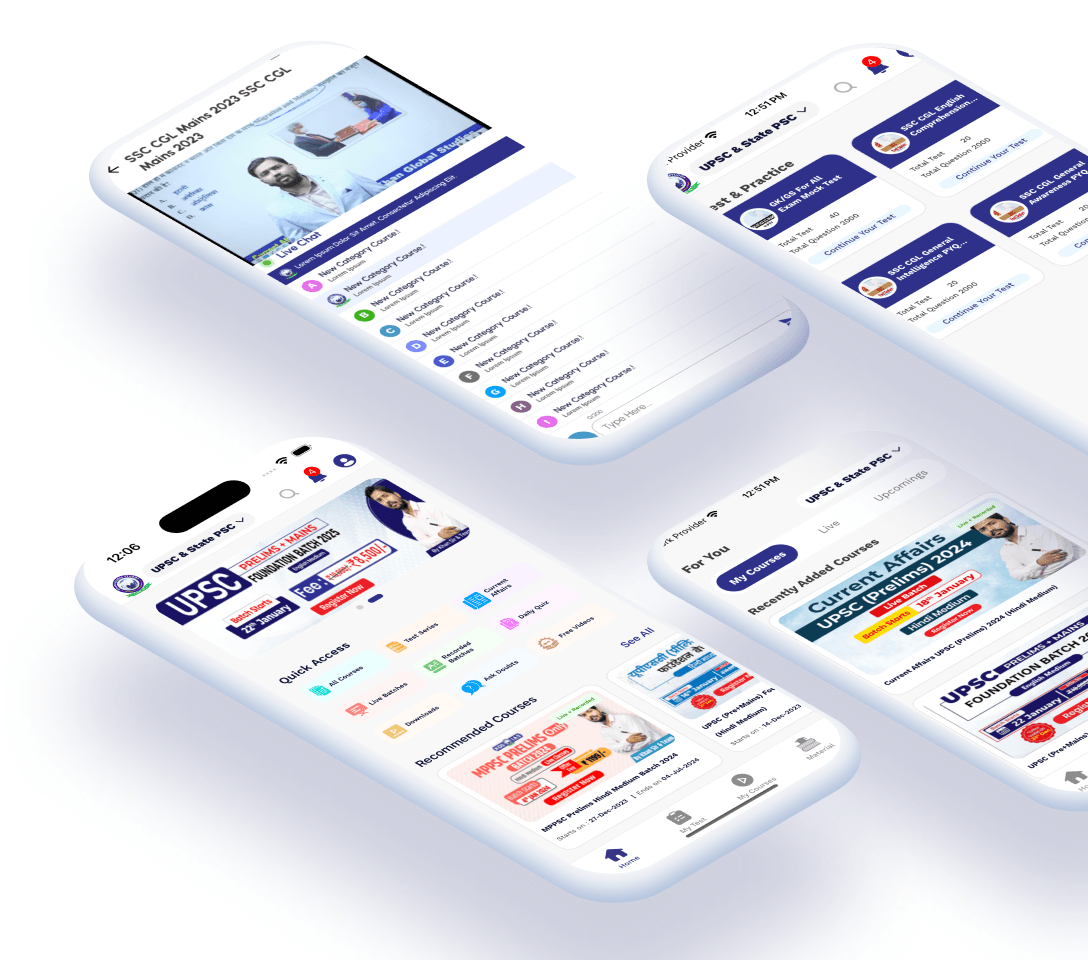
The most trusted learning platform on your phone
With our training programs, learning online can be a very exciting experience! Take the next step toward achieving your professional and personal objectives



Course Related Query:
Ask Your DoubtsStore Related Query:[email protected]NCERT Books
Resources
We love learning. Through our innovative solutions, we encourage ourselves, our teams, and our Students to grow. We welcome and look for diverse perspectives and opinions because they enhance our decisions. We strive to understand the big picture and how we contribute to the company’s objectives. We approach challenges with optimism and harness the power of teamwork to accomplish our goals. These aren’t just pretty words to post on the office wall. This is who we are. It’s how we work. And it’s how we approach every interaction with each other and our Students.
Come with an open mind, hungry to learn, and you’ll experience unmatched personal and professional growth, a world of different backgrounds and perspectives, and the freedom to be you—every day. We strive to build and sustain diverse teams and foster a culture of belonging. Creating an inclusive environment where every students feels welcome, appreciated, and heard gives us something to feel (really) good about.
Get Free academic Counseling & Course Details