You're all caught up—no notifications available.
Explore All Exams at KGS


All Exams
Explore All Exams at KGS

Khan Sir Courses
Geography I Polity I History | World Map I Indian Map I Economics I Biology

UPSC & State PSC
UPSC I BPSC I UP-PSC I MP-PSC

State Exams
UP I Bihar I MP | Rajasthan

NEET | JEE | CUET
NEET | JEE | CUET

Defence Exams
NDA I CDS I CAPF I AFCAT I SSB I Agniveer

Police Exams
UP SI | Bihar SI | Delhi Police | UP Constable

SSC Exams
CGL I CPO I CHSL I MTS I SSC GD I Delhi Police

Foundation Courses
Physics I Chemistry I Biology I History I Geography I Polity I NCERT I Math I English | Map I Reasoning

Railway Exams
RRB | RPF

Teaching Exams
TET | Teaching | UGC

Banking Exams
SBI | RBI | IBPS

Engineering Exams
Civil | Electrical | Mechanical
UGC NET
UGC NET/JRF
Current Affairs provides you with the best compilation of the Daily Current Affairs taking place across the globe: National, International, Sports, Science and Technology, Banking, Economy, Agreement, Appointments, Ranks, and Report and General Studies

SYLLABUS
GS-3: Energy security; Development of alternative sources of energy; Clean fuel and low-carbon technologies; New and emerging energy technologies; Infrastructure (energy infrastructure)
Context: Recently, a research team at CSIR-NCL has developed a patent-protected technology for the production of Dimethyl Ether (DME), a synthetic fuel and a potential alternative to LPG.
About the Technology
• Developed by the Council of Scientific and Industrial Research – National Chemical Laboratory, Pune, the technology improves both the catalyst design and process engineering.
• It is designed as an indigenous, clean fuel alternative that can be blended with LPG and used for domestic and industrial applications.
• A special technology has developed a catalyst that enables efficient conversion of methanol into DME.
• The process operates at around 10 bar pressure, allowing DME to be directly filled into cylinders, making storage and transport convenient.
• Methane (natural gas) serves as an indirect feedstock and is converted into syngas (CO and H2), then into methanol, which is used to produce DME.
• A flexible burner prototype has been developed, capable of operating from 100% LPG to 100% DME, including intermediate blends.
• Production Pathways and Feedstock Flexibility: DME is produced from methanol, which can be derived from multiple sources such as Natural gas (via syngas), Coal, Biomass (agricultural residues), and captured carbon dioxide (CO₂).
• Regulatory Framework and Blending Provisions: The Bureau of Indian Standards (BIS) has notified IS 18698:2024, permitting blending of up to 20% DME with LPG for domestic, commercial, and industrial use.
About the Dimethyl Ether (DME)
• It is a colourless, non-toxic, and highly flammable gas, used as an eco-friendly aerosol propellant, refrigerant, and clean-burning fuel.
• It can be produced from natural gas, coal, or biomass, and serves as a sustainable alternative to diesel or LPG.
• It is considered a “second-generation” alternative fuel with a high cetane number (>55), making it suitable for compression ignition engines.
• Properties:
• Applications:
Significance of this Technological Development
• Energy Security: India imports over 80% of its fossil fuel needs. Recent global disruptions have increased LPG prices, impacting households, particularly beneficiaries of the Pradhan Mantri Ujjwala Yojana.
• Cleaner Fuel Option: It emits significantly lower soot, NOx, SOx, and particulate matter than conventional fuels, while offering thermal efficiency comparable to LPG.
• Reduction in Import Bill: India imported nearly 21 million tonnes of LPG in 2024, and replacing just 8% LPG with DME could save about ₹9,500 crore annually in foreign exchange.
• Uses beyond Kitchen: It can serve as an automotive fuel, act as a propellant replacing ozone-depleting CFCs, and function as a chemical intermediate for producing olefins, dimethyl sulfate, and methyl acetate.
• Climate and Circular Economy Potential: DME can be produced from captured CO₂ (flue gas) using advanced catalytic processes and green hydrogen. This supports carbon capture, utilisation, and clean fuel production, contributing to climate mitigation.
Government Initiatives to Reduce Import Dependency on Petroleum
• SATAT (Sustainable Alternative Towards Affordable Transportation): Launched to promote Compressed Bio-Gas (CBG) produced from agricultural residue, cattle dung, and municipal solid waste as an alternative automotive fuel.
• Ethanol Blending Programme (EBP): The government advanced the target to achieve 20% ethanol blending in petrol (E20), promoting cleaner combustion in engines.
• National Policy on Biofuels, 2018: Permits the use of diverse feedstocks (sugar/starch crops) for biofuel production and promotes biodiesel blending.
• National Green Hydrogen Mission: Aims to make India a global hub for the production and export of Green Hydrogen, serving as a sustainable fuel for the industrial and transport sectors.
• FAME India Scheme (Faster Adoption and Manufacturing of Hybrid and Electric Vehicles): Incentivises the purchase of electric vehicles (EVs) and supports the development of charging infrastructure to reduce reliance on petroleum-based transportation.
• Methanol Economy Programme (NITI Aayog): Aims to reduce fuel bills and greenhouse gas emissions by blending methanol (derived from high-ash coal and solid waste) in transportation.
• GOBAR-DHAN Scheme (Galvanising Organic Bio-Agro Resources): Converts cattle dung and farm waste into biogas, supporting rural energy needs and reducing pollution.
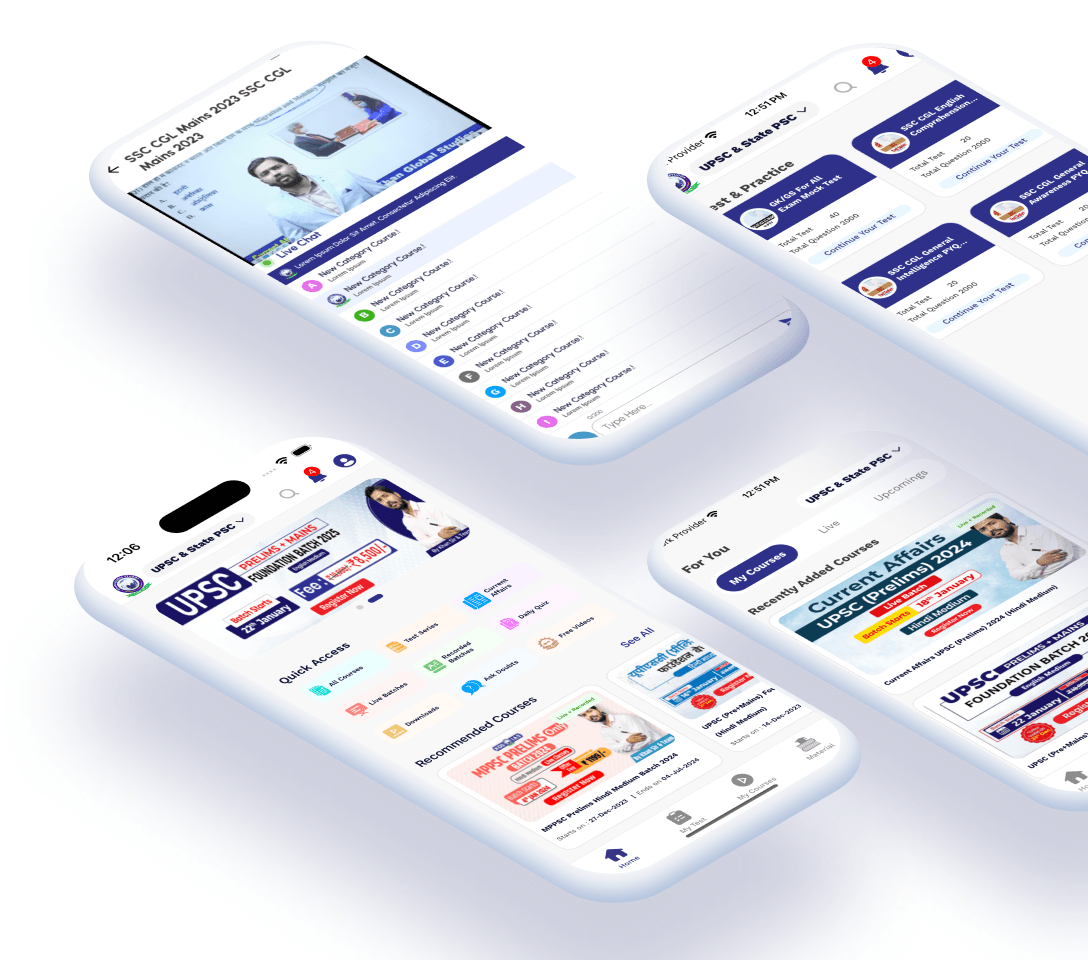
The most trusted learning platform on your phone
With our training programs, learning online can be a very exciting experience! Take the next step toward achieving your professional and personal objectives



Course Related Query:
Ask Your DoubtsStore Related Query:[email protected]NCERT Books
Resources
We love learning. Through our innovative solutions, we encourage ourselves, our teams, and our Students to grow. We welcome and look for diverse perspectives and opinions because they enhance our decisions. We strive to understand the big picture and how we contribute to the company’s objectives. We approach challenges with optimism and harness the power of teamwork to accomplish our goals. These aren’t just pretty words to post on the office wall. This is who we are. It’s how we work. And it’s how we approach every interaction with each other and our Students.
Come with an open mind, hungry to learn, and you’ll experience unmatched personal and professional growth, a world of different backgrounds and perspectives, and the freedom to be you—every day. We strive to build and sustain diverse teams and foster a culture of belonging. Creating an inclusive environment where every students feels welcome, appreciated, and heard gives us something to feel (really) good about.
Get Free academic Counseling & Course Details