You're all caught up—no notifications available.
Explore All Exams at KGS


All Exams
Explore All Exams at KGS

Khan Sir Courses
Geography I Polity I History | World Map I Indian Map I Economics I Biology

UPSC & State PSC
UPSC I BPSC I UP-PSC I MP-PSC

State Exams
UP I Bihar I MP | Rajasthan

NEET | JEE | CUET
NEET | JEE | CUET

Defence Exams
NDA I CDS I CAPF I AFCAT I SSB I Agniveer

Police Exams
UP SI | Bihar SI | Delhi Police | UP Constable

SSC Exams
CGL I CPO I CHSL I MTS I SSC GD I Delhi Police

Foundation Courses
Physics I Chemistry I Biology I History I Geography I Polity I NCERT I Math I English | Map I Reasoning

Railway Exams
RRB | RPF

Teaching Exams
TET | Teaching | UGC

Banking Exams
SBI | RBI | IBPS

Engineering Exams
Civil | Electrical | Mechanical
UGC NET
UGC NET/JRF
Current Affairs provides you with the best compilation of the Daily Current Affairs taking place across the globe: National, International, Sports, Science and Technology, Banking, Economy, Agreement, Appointments, Ranks, and Report and General Studies

SYLLABUS
GS-2: Structure, organization and functioning of the Executive and the Judiciary Ministries and Departments of the Government.
Context: In its first-ever order allowing passive euthanasia, the Supreme Court of India permitted the withdrawal of artificial life support of a 32-year-old man who has been in a comatose condition for more than 12 years.
More on the News
• The court allowed the withdrawal of Clinically Assisted Nutrition and Hydration (CANH), upholding the patient’s right to die with dignity under Article 21 of the Constitution.
• The case marks the first practical implementation of the Supreme Court’s 2018 guidelines on passive euthanasia.
Key Highlights of the Judgment
• Withdrawal of Life Support Allowed: The Court permitted the withdrawal of Clinically Assisted Nutrition and Hydration (CANH), concluding that continued treatment was no longer in the patient’s best interests.
• Recognition of CANH as Medical Treatment: The Court clarified that CANH—administered through medical procedures such as a PEG tube—is a technologically mediated medical intervention supervised by healthcare professionals and therefore qualifies as medical treatment, even when provided at home.
• Conditions for Withdrawal of Treatment: The Court held that withdrawal or withholding of medical treatment must satisfy two criteria:
• Integration with Palliative and End-of-Life Care: The Court directed that withdrawal of life support should occur under a structured palliative and end-of-life (EOL) care plan to ensure the patient experiences no pain, suffering, or indignity.
• Role of Medical Boards: The decision followed extensive consultations with the patient’s family and multiple medical boards, which unanimously agreed that continued treatment would not improve his condition.
• Call for Legislation: The Court urged the Central Government to enact a comprehensive law on end-of-life care and life-support withdrawal, noting that absence of legislation could allow non-medical factors such as financial distress or lack of insurance to influence decisions.
• Judicial Observations: The Bench emphasised that withdrawing life-sustaining treatment does not amount to abandoning the patient; rather, it allows the natural course of death while ensuring humane care.
About Euthanasia
• Euthanasia refers to the practice of ending a patient’s life to relieve suffering caused by an incurable or terminal medical condition.
• It is generally discussed in medical ethics and law in terms of two main forms—active euthanasia and passive euthanasia.
• Active Euthanasia: Active euthanasia involves a direct medical intervention intended to cause death, such as administering a lethal injection or medication.
• Passive Euthanasia: Passive euthanasia involves withholding or withdrawing life-sustaining medical treatment, allowing the patient to die naturally when recovery is medically impossible or treatment is considered futile.
• Clarification by the Supreme Court: The Supreme Court has observed that the expression “passive euthanasia” can be misleading, as it may suggest a deliberate act to end life.
• Persistent Vegetative State (PVS): A Persistent Vegetative State (PVS) is a medical condition in which a patient shows wakefulness but lacks awareness of themselves or their surroundings.
India’s Legal Status on Euthanasia
• Constitutional Basis: The right to life under Article 21 has been interpreted to include the right to die with dignity in appropriate circumstances.
• Key Judicial Developments:
• Government Guidelines: In 2024, the Union Health Ministry issued draft guidelines outlining conditions under which life-support withdrawal may be considered, including:
• Current Position: Passive euthanasia (withdrawal or withholding of treatment) is permitted under strict guidelines.
SOURCES:
The Hindu
The Hindu
The Hindu
Indian Express
News on Air
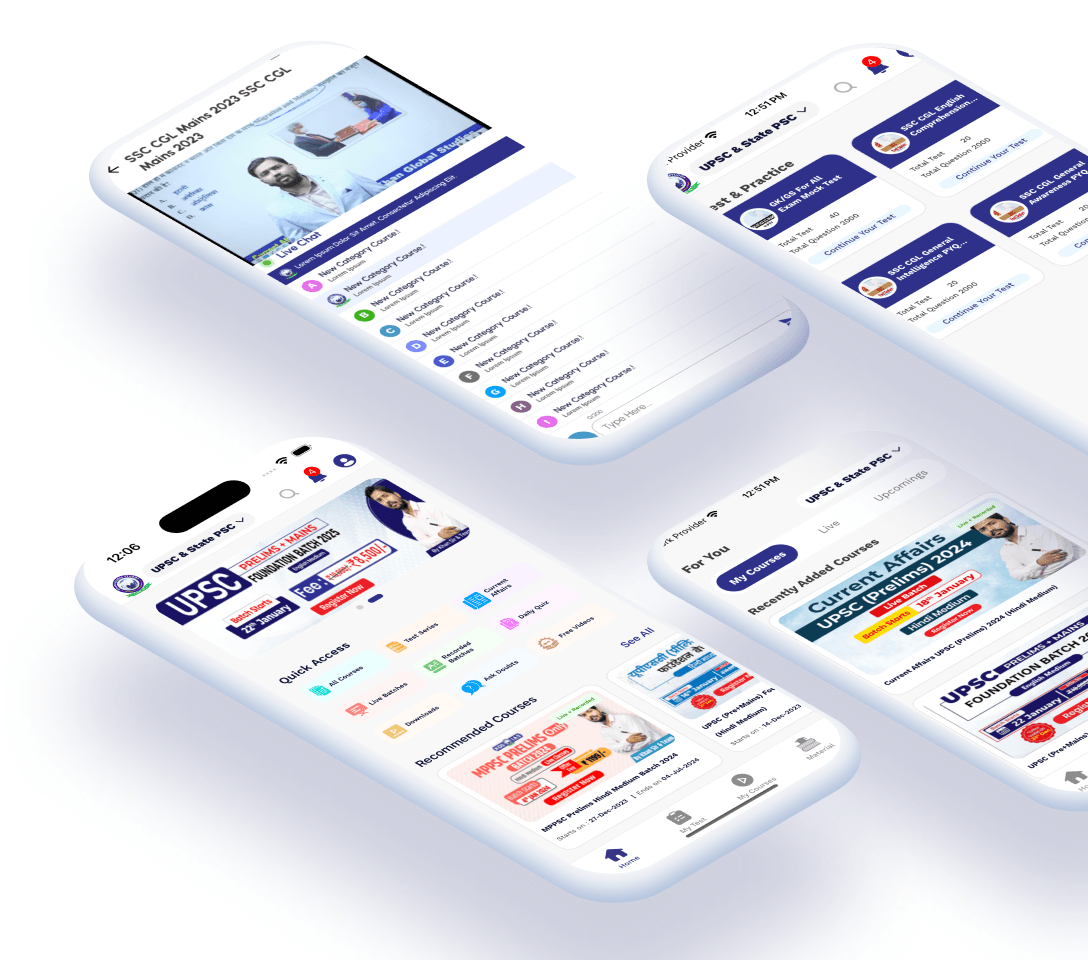
The most trusted learning platform on your phone
With our training programs, learning online can be a very exciting experience! Take the next step toward achieving your professional and personal objectives



Course Related Query:
Ask Your DoubtsStore Related Query:[email protected]NCERT Books
Resources
We love learning. Through our innovative solutions, we encourage ourselves, our teams, and our Students to grow. We welcome and look for diverse perspectives and opinions because they enhance our decisions. We strive to understand the big picture and how we contribute to the company’s objectives. We approach challenges with optimism and harness the power of teamwork to accomplish our goals. These aren’t just pretty words to post on the office wall. This is who we are. It’s how we work. And it’s how we approach every interaction with each other and our Students.
Come with an open mind, hungry to learn, and you’ll experience unmatched personal and professional growth, a world of different backgrounds and perspectives, and the freedom to be you—every day. We strive to build and sustain diverse teams and foster a culture of belonging. Creating an inclusive environment where every students feels welcome, appreciated, and heard gives us something to feel (really) good about.
Get Free academic Counseling & Course Details