You're all caught up—no notifications available.
Explore All Exams at KGS


All Exams
Explore All Exams at KGS

Khan Sir Courses
Geography I Polity I History | World Map I Indian Map I Economics I Biology

UPSC & State PSC
UPSC I BPSC I UP-PSC I MP-PSC

State Exams
UP I Bihar I MP | Rajasthan

NEET | JEE | CUET
NEET | JEE | CUET

Defence Exams
NDA I CDS I CAPF I AFCAT I SSB I Agniveer

Police Exams
UP SI | Bihar SI | Delhi Police | UP Constable

SSC Exams
CGL I CPO I CHSL I MTS I SSC GD I Delhi Police

Foundation Courses
Physics I Chemistry I Biology I History I Geography I Polity I NCERT I Math I English | Map I Reasoning

Railway Exams
RRB | RPF

Teaching Exams
TET | Teaching | UGC

Banking Exams
SBI | RBI | IBPS

Engineering Exams
Civil | Electrical | Mechanical
UGC NET
UGC NET/JRF
Current Affairs provides you with the best compilation of the Daily Current Affairs taking place across the globe: National, International, Sports, Science and Technology, Banking, Economy, Agreement, Appointments, Ranks, and Report and General Studies
SYLLABUS
GS-3: Conservation, environmental pollution and degradation, environmental impact assessment.
Context: The World Meteorological Organization (WMO), in its State of the Global Climate Report 2025, released on World Meteorological Day (23 March), warns that the Earth’s climate system is in a state of emergency due to unprecedented warming and energy imbalance.
About the Report
• The State of the Global Climate is an annual flagship report of WMO that provides an authoritative assessment of the global climate system.
• It compiles scientific inputs from National Meteorological and Hydrological Services, WMO Regional Climate Centres, UN agencies, international data centres, and climate experts.
• The report updates key climate indicators such as temperature, greenhouse gases, ocean heat, sea level, and cryosphere changes.
• It also documents major extreme weather events and their socio-economic impacts, including effects on health, food security, and displacement.
• The 2025 edition introduces Earth’s Energy Imbalance as a key indicator, reflecting advances in climate science and monitoring.
Key Findings of the Report
• Record-Breaking Warming Trends: The period 2015–2025 constitutes the 11 hottest years on record.
• Rising Greenhouse Gas Concentrations: Atmospheric carbon dioxide levels are ~50% higher than pre-industrial levels.
• Earth’s Energy Imbalance at Record High: For the first time, the report highlights Earth’s Energy Imbalance as a core indicator.
• Oceans (Major Heat and Carbon Sink): Oceans absorb over 90% of excess heat and act as a climate buffer.
• Accelerating Sea-Level Rise: Global mean sea level is now ~11 cm higher than in 1993.
• Cryosphere Under Severe Stress: Arctic Sea ice is at or near record lows, while Antarctic Sea ice is among the lowest recorded.
• Intensification of Extreme Weather Events: Climate change is increasing the frequency and intensity of extreme events such as heatwaves, heavy rainfall and floods, tropical cyclones and storms and wildfires, and droughts.
• Climate Impacts on Society, Health, and Economy: Climate change is adversely affecting livelihoods, ecosystems, and health systems by increasing risks of vector- and water-borne diseases, mental stress, and widespread heat exposure, with over one-third of the global workforce facing heat-related productivity losses.
• Food Security, Displacement, and Systemic Risks: Extreme weather events are triggering cascading impacts on agriculture, food security, and migration, leading to large-scale displacement and heightened vulnerability, especially in fragile and conflict-affected regions.
• Long-Term and Irreversible Changes: Many climate impacts, particularly ocean warming, sea-level rise, and acidification, are irreversible over centuries to millennia, locking in long-term consequences for the planet.
• Urgent Need for Climate Action: The report highlights the urgent need for rapid emission reductions, transition away from fossil fuels, and achievement of net-zero targets to prevent further escalation of climate risks.
Sources:
WMO
Indian Express
Down To Earth
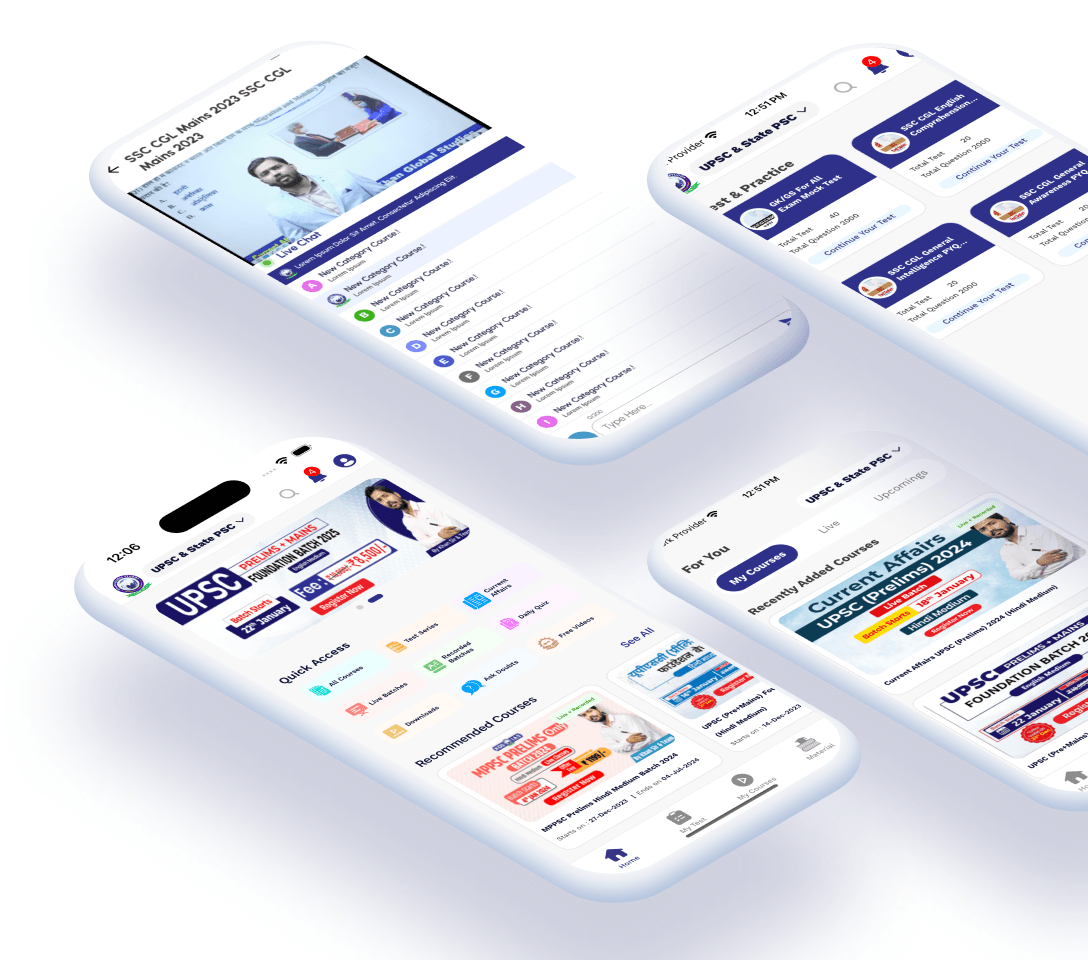
The most trusted learning platform on your phone
With our training programs, learning online can be a very exciting experience! Take the next step toward achieving your professional and personal objectives


Course Related Query:
Ask Your DoubtsStore Related Query:[email protected]NCERT Books
Resources
We love learning. Through our innovative solutions, we encourage ourselves, our teams, and our Students to grow. We welcome and look for diverse perspectives and opinions because they enhance our decisions. We strive to understand the big picture and how we contribute to the company’s objectives. We approach challenges with optimism and harness the power of teamwork to accomplish our goals. These aren’t just pretty words to post on the office wall. This is who we are. It’s how we work. And it’s how we approach every interaction with each other and our Students.
Come with an open mind, hungry to learn, and you’ll experience unmatched personal and professional growth, a world of different backgrounds and perspectives, and the freedom to be you—every day. We strive to build and sustain diverse teams and foster a culture of belonging. Creating an inclusive environment where every students feels welcome, appreciated, and heard gives us something to feel (really) good about.
Get Free academic Counseling & Course Details