KGS

All Exams

Explore All Exams at KGS

All Exams
Current Affairs made simple.

Current Affairs provides you with the best compilation of the Daily Current Affairs taking place across the globe: National, International, Sports, Science and Technology, Banking, Economy, Agreement, Appointments, Ranks, and Report and General Studies

Current Affairs

Centre Proposes Article 371(K) for Ladakh

SYLLABUS

GS-2: Functions and responsibilities of the Union and the States, issues and challenges pertaining to the federal structure, devolution of powers and finances up to local levels and challenges therein. 

Context: The Centre has proposed a new constitutional provision, Article 371(K), to provide additional constitutional safeguards to Ladakh.

More on the News:
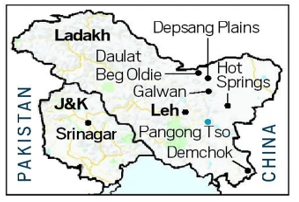
  • Stakeholder Discussions: The proposal emerged from discussions between the Ministry of Home Affairs, the Leh Apex Body (LAB) and the Kargil Democratic Alliance (KDA).
  • Sui Generis Model: It envisages a sui generis governance model designed specifically for Ladakh, while keeping the demand for full statehood as a long-term aspiration.
  • Legislative Powers: The proposed arrangement would establish a directly elected governing body with legislative powers over land, culture and language, forests, environment and natural resources.
  • In-Principle Stage: The proposal remains at the in-principle stage, with no draft prepared yet and key questions regarding executive, financial, planning, police and law-and-order powers still unresolved

Why Has Ladakh Been Demanding Constitutional Safeguards?

  • Post-2019 Changes: Ladakh’s demand for greater political and constitutional protection gained momentum after the Jammu and Kashmir Reorganisation in August 2019, when it became a separate Union Territory without a legislature.
  • Political Representation: Before 2019, Ladakh had four MLAs in the erstwhile Jammu and Kashmir Legislative Assembly. After becoming a Union Territory, its administration came to be largely managed by bureaucrats, raising concerns over political representation and democratic participation.
  • Land, Employment and Identity: Concerns over land, employment, demography and cultural identity were further strengthened by changes in domicile rules in Jammu and Kashmir.
    • Ladakh has two Hill Councils — Leh and Kargil, but they are not covered by the Sixth Schedule, and their powers remain limited.
  • Ladakh representatives reiterated their demands for statehood, Sixth Schedule protection, and a separate Ladakh Administrative and Police Service.

About Sixth Schedule

  • Constitutional Provision: The Sixth Schedule, provided under Article 244, establishes Autonomous District Councils (ADCs) with a degree of legislative, judicial and administrative autonomy in specified tribal areas.
  • Applicability and Powers: The Sixth Schedule currently applies to tribal areas in Assam, Meghalaya, Mizoram and Tripura.
    • The councils can exercise powers relating to land, forests, water, agriculture, village administration, social customs, inheritance and mining.
  • Ladakh and Sixth Schedule: In September 2019, the National Commission for Scheduled Tribes recommended bringing Ladakh under the Sixth Schedule, citing its predominantly tribal population and distinct cultural heritage.
    •  However, no region outside the Northeast has so far been included under the Sixth Schedule.

How Would Article 371(K) Differ from the Sixth Schedule?
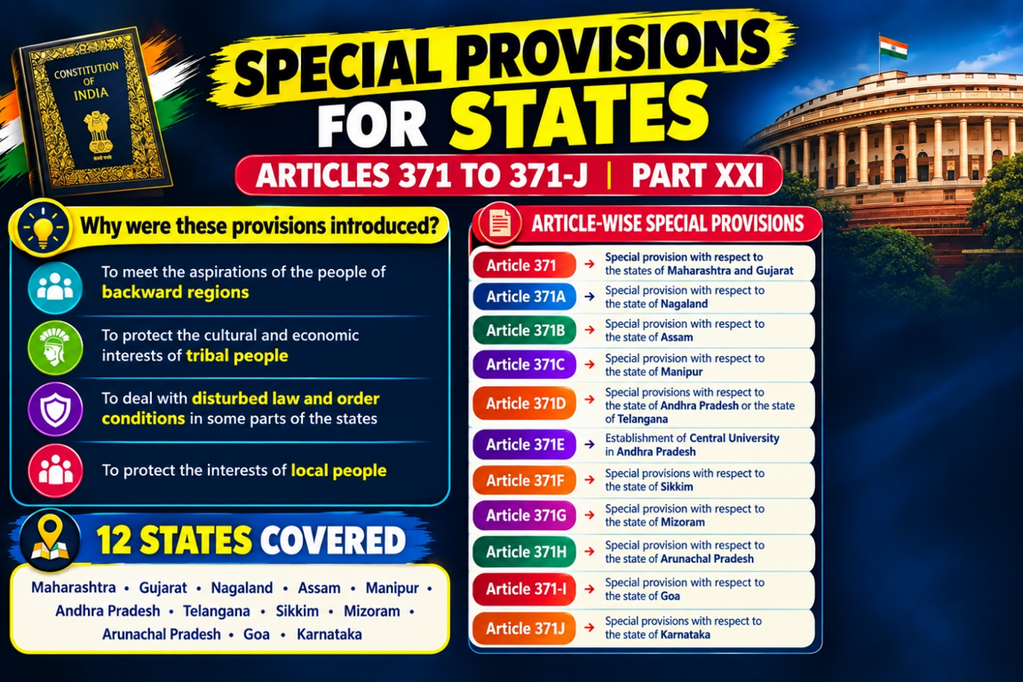
  • The proposed Article 371(K) would create a separate constitutional arrangement specifically for Ladakh, rather than simply extending the Sixth Schedule to the Union Territory.
  • The Sixth Schedule provides for autonomous district-level institutions with constitutionally defined powers, whereas the proposed Article 371(K) appears to envisage a directly elected governing body at the Union Territory level with legislative authority over specified subjects.
  • The precise distinction, however, will depend on the wording of the draft constitutional provision.

Key Issues in the Proposed Article 371(K)

  • Extent of Powers: The most important issue is the actual extent of powers that the proposed elected body would exercise.
  • Unresolved Powers: The Centre and Ladakh representatives have yet to reach agreement on its executive, financial and planning powers, along with its role in police and law and order.
  • Unclear Autonomy: Until a detailed draft is prepared, it remains unclear how much autonomy the proposed body would actually enjoy.
  • Parliamentary Amendment: Introducing Article 371(K) would require a constitutional amendment by Parliament, as the executive cannot enact it independently.

Significance for Ladakh

  • The proposed Article 371(K) could provide Ladakh with a tailor-made constitutional framework for protecting its land, culture, environment, natural resources and local interests, while also strengthening democratic representation.
  • Its significance lies particularly in the fact that it would potentially create a special constitutional arrangement for a Union Territory.
  • Thus, instead of extending the Sixth Schedule to Ladakh, the proposal seeks to establish a separate constitutional model designed specifically for the region.

Khan Global Studies App

The most trusted learning platform on your phone

With our training programs, learning online can be a very exciting experience. Take the next step toward achieving your professional and personal objectives.


Download on the App StoreGet it on Google Play
KGS learning dashboard and mobile application
logo
Khan Global Studies Pvt. Ltd. 5th Floor,
A13A, Graphix 1 Tower B, Sector 62,
Noida, Uttar Pradesh 201309

Course Related Query:

Ask Your DoubtsStore Related Query:[email protected]

Get Free Academic Counseling & Course Details

KGS best learning platform

About Khan Global Studies

We love learning. Through our innovative solutions, we encourage ourselves, our teams, and our Students to grow. We welcome and look for diverse perspectives and opinions because they enhance our decisions. We strive to understand the big picture and how we contribute to the company’s objectives. We approach challenges with optimism and harness the power of teamwork to accomplish our goals. These aren’t just pretty words to post on the office wall. This is who we are. It’s how we work. And it’s how we approach every interaction with each other and our Students.


What Makes Us Different

Come with an open mind, hungry to learn, and you’ll experience unmatched personal and professional growth, a world of different backgrounds and perspectives, and the freedom to be you—every day. We strive to build and sustain diverse teams and foster a culture of belonging. Creating an inclusive environment where every students feels welcome, appreciated, and heard gives us something to feel (really) good about.

©Copyright 2026 KhanGlobalStudies

Centre Proposes Article 371(K) for Ladakh | Current Affairs