You're all caught up—no notifications available.
Explore All Exams at KGS


All Exams
Explore All Exams at KGS

Khan Sir Courses
Geography I Polity I History | World Map I Indian Map I Economics I Biology

UPSC & State PSC
UPSC I BPSC I UP-PSC I MP-PSC

State Exams
UP I Bihar I MP | Rajasthan

NEET | JEE | CUET
NEET | JEE | CUET

Defence Exams
NDA I CDS I CAPF I AFCAT I SSB I Agniveer

Police Exams
UP SI | Bihar SI | Delhi Police | UP Constable

SSC Exams
CGL I CPO I CHSL I MTS I SSC GD I Delhi Police

Foundation Courses
Physics I Chemistry I Biology I History I Geography I Polity I NCERT I Math I English | Map I Reasoning

Railway Exams
RRB | RPF

Teaching Exams
TET | Teaching | UGC

Banking Exams
SBI | RBI | IBPS

Engineering Exams
Civil | Electrical | Mechanical
UGC NET
UGC NET/JRF
Current Affairs provides you with the best compilation of the Daily Current Affairs taking place across the globe: National, International, Sports, Science and Technology, Banking, Economy, Agreement, Appointments, Ranks, and Report and General Studies

SYLLABUS
GS-2: Government Policies and Interventions for Development in various sectors and Issues arising out of their Design and Implementation; Issues Relating to Development and Management of Social Sector/Services relating to Health, Education, Human Resources.
Context: The Union Ministry of Health and Family Welfare recently released the National Family Health Survey-6 (NFHS-6), providing comprehensive data on population, health, nutrition, emerging lifestyle diseases, and family welfare indicators in India.
More on the News
• NFHS-6 was conducted during 2023-24 by the Ministry of Health and Family Welfare (MoHFW) with the International Institute for Population Sciences (IIPS), Mumbai, as the nodal agency.
• The survey covered nearly 6.79 lakh households across 715 districts of all States and Union Territories and collected information from households, women, men, and children across a wide range of demographic and health indicators.
• The findings are significant for monitoring progress towards Sustainable Development Goals (SDGs), Universal Health Coverage (UHC), National Health Policy targets, and India's demographic transition.
Key Findings of NFHS-6
Safe Motherhood and Maternal Healthcare
• Maternal healthcare indicators registered a significant improvement:
• Maternal nutrition outcomes also improved:
Institutional Deliveries and Newborn Care
• Institutional deliveries increased from 88.6% to 90.6%, moving India closer towards universal institutional delivery coverage.
• Births attended by skilled health personnel improved from 89.4% to 91.3%.
• Newborns receiving postnatal care within two days of delivery from trained health personnel increased from 79.1% to 85.3%.
Family Planning Indicators
• India’s Total Fertility Rate (TFR) remained stable at 2.0, indicating that the country is nearing replacement-level fertility (2.1).
• The Contraceptive Prevalence Rate (CPR) increased from 66.7% to 69.1%, reflecting improved access to family planning services.
Child Immunisation and Child Health
• Full vaccination coverage among children aged 12–23 months increased from 83.8% to 87.1%.
• 95.6% of children received most vaccinations through public health facilities, underscoring continued trust in the public healthcare system.
• Coverage of any vaccination among children aged 12–23 months remained consistently high at above 96%.
• Child health outcomes also improved:
Child Nutrition and Feeding Practices
• NFHS-6 recorded encouraging improvements in child nutrition:
• Infant and young child feeding practices improved:
Expansion of Health Protection Coverage
• Households with at least one member covered under a health insurance/financing scheme increased substantially from 41.0% to 60.2%.
• The expansion reflects the growing reach of initiatives such as Ayushman Bharat–Pradhan Mantri Jan Arogya Yojana (AB-PMJAY) and other public health protection programmes.
Women’s Empowerment and Financial Inclusion
• Women’s digital and financial inclusion witnessed significant progress:
• Use of hygienic menstrual protection methods among women aged 15–24 years increased from 77.6% to 79.2%, supported by initiatives such as the Menstrual Hygiene Scheme (MHS) within the Rashtriya Kishor Swasthya Karyakram (RKSK) and the affordable sanitary products under the Pradhan Mantri Bhartiya Janaushadhi Pariyojana.
About the National Family Health Survey (NFHS)
• The National Family Health Survey (NFHS) is a large-scale, nationally representative household survey that provides data on population, health, nutrition, fertility, family planning, maternal and child health, and other socio-economic indicators in India.
• Conducted under the Ministry of Health and Family Welfare (MoHFW) with the International Institute for Population Sciences (IIPS), Mumbai as the nodal agency, the survey was first launched in 1992–93 (NFHS-1).
• NFHS provides estimates at the national, State/UT, and district levels, making it a key source of evidence for policy formulation, programme implementation, and monitoring of health and development outcomes.
• It plays an important role in tracking progress towards Sustainable Development Goals (SDGs), Universal Health Coverage (UHC), and various flagship health, nutrition, and social welfare programmes.
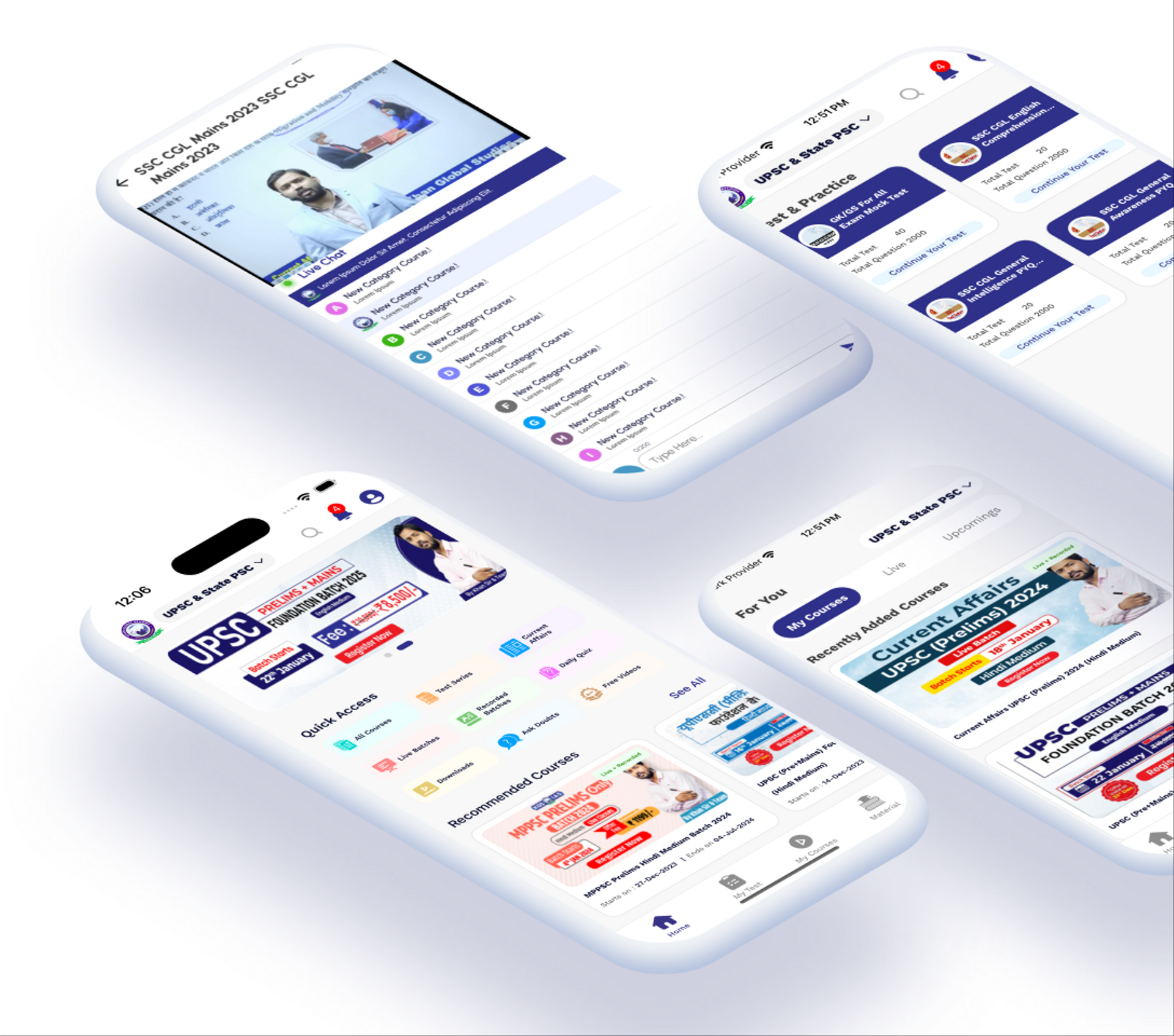
The most trusted learning platform on your phone
With our training programs, learning online can be a very exciting experience! Take the next step toward achieving your professional and personal objectives



Course Related Query:
Ask Your DoubtsStore Related Query:[email protected]NCERT Books
Resources
We love learning. Through our innovative solutions, we encourage ourselves, our teams, and our Students to grow. We welcome and look for diverse perspectives and opinions because they enhance our decisions. We strive to understand the big picture and how we contribute to the company’s objectives. We approach challenges with optimism and harness the power of teamwork to accomplish our goals. These aren’t just pretty words to post on the office wall. This is who we are. It’s how we work. And it’s how we approach every interaction with each other and our Students.
Come with an open mind, hungry to learn, and you’ll experience unmatched personal and professional growth, a world of different backgrounds and perspectives, and the freedom to be you—every day. We strive to build and sustain diverse teams and foster a culture of belonging. Creating an inclusive environment where every students feels welcome, appreciated, and heard gives us something to feel (really) good about.
Get Free academic Counseling & Course Details