You're all caught up—no notifications available.
Explore All Exams at KGS


All Exams
Explore All Exams at KGS

Khan Sir Courses
Geography I Polity I History | World Map I Indian Map I Economics I Biology

UPSC & State PSC
UPSC I BPSC I UP-PSC I MP-PSC

State Exams
UP I Bihar I MP | Rajasthan

NEET | JEE | CUET
NEET | JEE | CUET

Defence Exams
NDA I CDS I CAPF I AFCAT I SSB I Agniveer

Police Exams
UP SI | Bihar SI | Delhi Police | UP Constable

SSC Exams
CGL I CPO I CHSL I MTS I SSC GD I Delhi Police

Foundation Courses
Physics I Chemistry I Biology I History I Geography I Polity I NCERT I Math I English | Map I Reasoning

Railway Exams
RRB | RPF

Teaching Exams
TET | Teaching | UGC

Banking Exams
SBI | RBI | IBPS

Engineering Exams
Civil | Electrical | Mechanical
UGC NET
UGC NET/JRF
Current Affairs provides you with the best compilation of the Daily Current Affairs taking place across the globe: National, International, Sports, Science and Technology, Banking, Economy, Agreement, Appointments, Ranks, and Report and General Studies

SYLLABUS
GS-2: Indian Constitution—Amendments, Significant Provisions; Issues and Challenges Pertaining to the Federal Structure, Devolution of Powers and Finances up to Local Levels and Challenges Therein.
Context: The Joint Parliamentary Committee (JPC) examining the proposed “One Nation, One Election” (ONOE) framework recently stated that simultaneous elections could save nearly ₹7 lakh crore over time and potentially increase India’s GDP growth by up to 1.6%.
More on the News
• The JPC is currently examining the Constitution (One Hundred and Twenty-Ninth Amendment) Bill, 2024 and the Union Territories Laws (Amendment) Bill, 2024, which seek to operationalise simultaneous elections in India.
o The JPC is headed by P. P. Chaudhary and has a total of 39 members, including 27 MPs from the Lok Sabha and 12 from the Rajya Sabha, apart from the Chairperson.
• The Constitution (One Hundred and Twenty-Ninth Amendment) Bill, 2024, primarily seeks to enable simultaneous elections to the Lok Sabha and State Legislative Assemblies, while synchronisation of local body elections has been proposed separately as a subsequent phase requiring additional constitutional amendments and ratification by at least half of the States.
• The idea of ONOE is based on recommendations of the High-Level Committee chaired by former President Ram Nath Kovind, whose report was accepted by the Union Cabinet in 2024.
About One Nation, One Election (ONOE)
• “One Nation, One Election” refers to the proposal of conducting simultaneous elections to the Lok Sabha and all State Legislative Assemblies, followed by synchronised local body elections within a fixed cycle.
• At present, elections in India are conducted separately based on the tenure of individual legislatures, resulting in frequent election cycles across different states.
• India followed simultaneous elections between 1951–52 and 1967, after which the cycle was disrupted due to premature dissolution of Assemblies, frequent use of Article 356, and political instability.
|
Arguments in Favour of ONOE |
Arguments Against ONOE |
|
·
Cost Concerns: Frequent elections increase costs for the government and political
parties, straining finances. Simultaneous elections would reduce these costs.
|
·
Federalism Conflict: Critics argue that ONOE may undermine India’s federal
structure by weakening the political autonomy and distinct electoral mandates
of states. |
|
·
Model Code of Conduct (MCC): Frequent imposition of the MCC causes
policy paralysis, slowing down development programs. |
·
Threat to Multi-party Democracy: ONOE may benefit larger national parties,
reducing the diversity of political representation and disadvantaging
regional parties. A 2015 study found a 77% chance that the
winning political party or alliance will win both the Lok Sabha and Assembly
elections” in that state when held simultaneously. |
|
·
Uncertainty and Instability: Asynchronous elections cause uncertainty,
disrupt supply chains, deter business investments, and hinder economic
growth. |
·
Accountability and Representation: ONOE risks blending state and national
issues, reducing voter representation and accountability by addressing
different issues in one election. |
|
·
Voter Fatigue: Staggered elections lead to voter fatigue, reducing voter turnout
and participation. |
·
Constitutional Hurdles: Amending the Constitution and the Representation of the People
Act (1951) would require a broad consensus among all parties, making
it difficult to implement. |
Key Challenges in Implementation
• Constitutional Amendments: The recommendations of the Committee require amending several provisions of the Constitution. It would also require amendments to the Representation of the People Act (RPA), 1951, which governs the timing of general elections and elections to state legislative assemblies.
• Logistical Requirements: Implementing simultaneous elections would incur high costs, including the need for additional EVMs/VVPATs. This expense could run into thousands of crores, as machines would need replacement every 15 years.
• Government Stability: Handling scenarios where governments fall or legislatures dissolve prematurely during their terms poses a democratic challenge. Implementing ONOE may undermine democratic norms and local empowerment efforts.
• Impact on Election Spending: ONOE aims to reduce election spending, but it may not effectively tackle the issue of black money in elections.
Way Forward
• Consensus-Based Implementation: ONOE should be implemented gradually through wider consultations with political parties, States, and constitutional institutions to preserve federal balance and democratic accountability.
• Complementary Electoral Reforms: Simultaneous elections should be accompanied by reforms such as greater transparency in political funding, strengthening intra-party democracy, and exploring state funding of elections.
• Strengthening Transparency and Accountability: Bringing political parties under Right to Information (RTI) frameworks can help improve public trust and accountability in the electoral process.
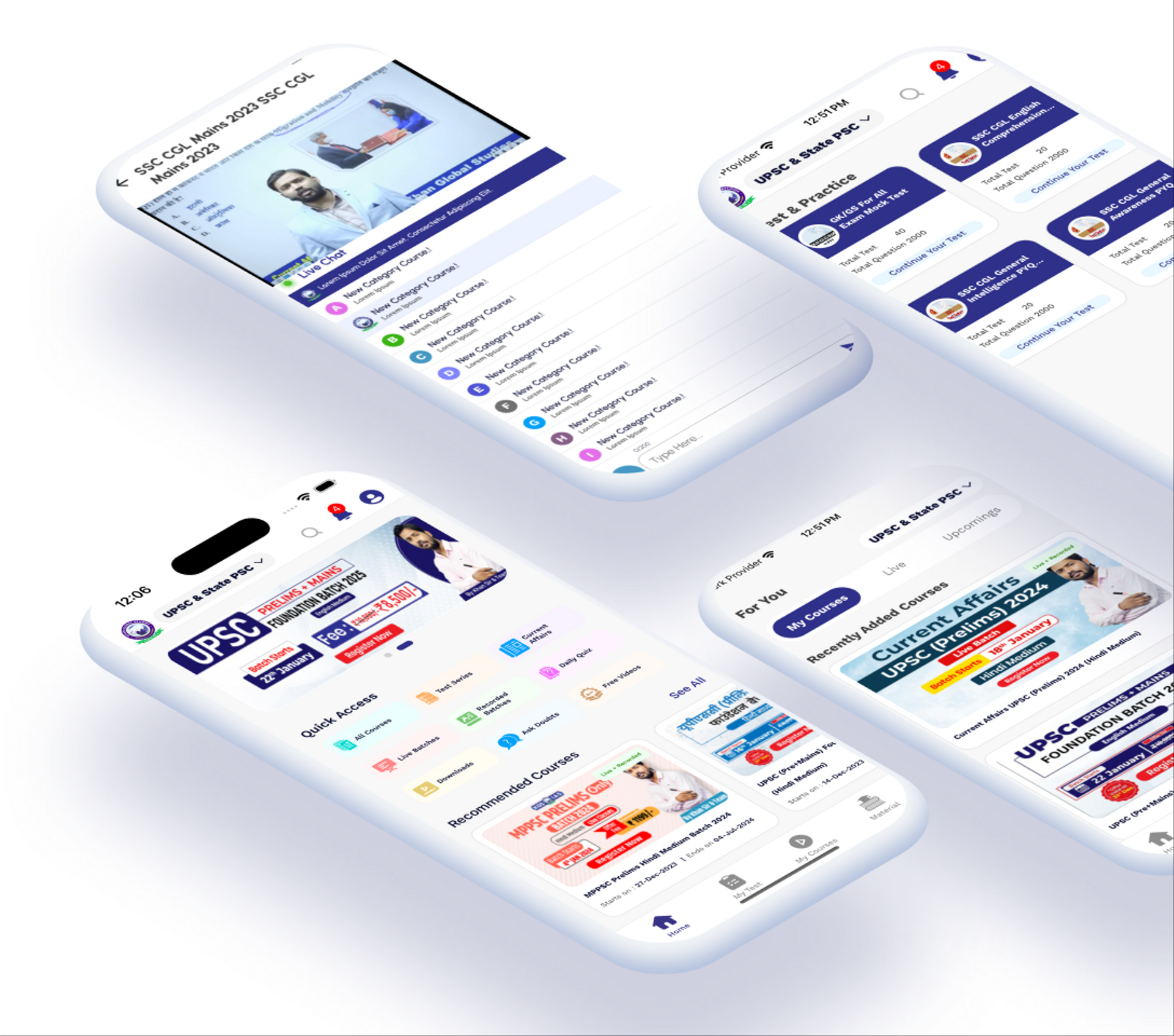
The most trusted learning platform on your phone
With our training programs, learning online can be a very exciting experience! Take the next step toward achieving your professional and personal objectives



Course Related Query:
Ask Your DoubtsStore Related Query:[email protected]NCERT Books
Resources
We love learning. Through our innovative solutions, we encourage ourselves, our teams, and our Students to grow. We welcome and look for diverse perspectives and opinions because they enhance our decisions. We strive to understand the big picture and how we contribute to the company’s objectives. We approach challenges with optimism and harness the power of teamwork to accomplish our goals. These aren’t just pretty words to post on the office wall. This is who we are. It’s how we work. And it’s how we approach every interaction with each other and our Students.
Come with an open mind, hungry to learn, and you’ll experience unmatched personal and professional growth, a world of different backgrounds and perspectives, and the freedom to be you—every day. We strive to build and sustain diverse teams and foster a culture of belonging. Creating an inclusive environment where every students feels welcome, appreciated, and heard gives us something to feel (really) good about.
Get Free academic Counseling & Course Details