You're all caught up—no notifications available.
Explore All Exams at KGS


All Exams
Explore All Exams at KGS

Khan Sir Courses
Geography I Polity I History | World Map I Indian Map I Economics I Biology

UPSC & State PSC
UPSC I BPSC I UP-PSC I MP-PSC

State Exams
UP I Bihar I MP | Rajasthan

NEET | JEE | CUET
NEET | JEE | CUET

Defence Exams
NDA I CDS I CAPF I AFCAT I SSB I Agniveer

Police Exams
UP SI | Bihar SI | Delhi Police | UP Constable

SSC Exams
CGL I CPO I CHSL I MTS I SSC GD I Delhi Police

Foundation Courses
Physics I Chemistry I Biology I History I Geography I Polity I NCERT I Math I English | Map I Reasoning

Railway Exams
RRB | RPF
Teaching Exams
TET | Teaching | UGC

Banking Exams
SBI | RBI | IBPS

Engineering Exams
Civil | Electrical | Mechanical
UGC NET
UGC NET/JRF
Current Affairs provides you with the best compilation of the Daily Current Affairs taking place across the globe: National, International, Sports, Science and Technology, Banking, Economy, Agreement, Appointments, Ranks, and Report and General Studies

SYLLABUS
GS-1: Role of women and women’s organization, population and associated issues, poverty and developmental issues, urbanization, their problems and their remedies.
Context: The Ministry of Statistics and Programme Implementation released the 27th edition of “Women and Men in India 2025: Selected Indicators and Data” at the National Deliberative Summit on “Data for Development” in Bhubaneswar.
About the Report
• Women and Men in India is an annual publication brought out by the National Statistical Office under MoSPI since 1995, providing a comprehensive gender-disaggregated statistical compendium.
• The 2025 edition compiles data from multiple ministries, departments, and organisations, covering key domains such as population, health, education, economic participation, decision-making, and violence against women.
• It includes 50 key indicators with metadata, improving clarity on definitions, sources, and methodology, and aligns with global frameworks like the Sustainable Development Goals (SDGs) and UN gender indicators.
• The report presents data across rural–urban, state/UT, and time-series dimensions, enabling evidence-based policymaking and tracking of gender disparities.
Key Findings of the Report
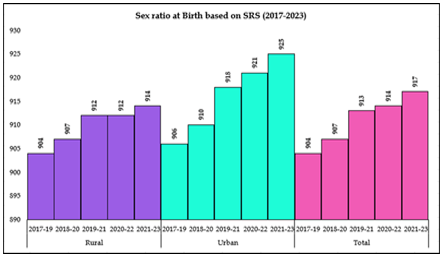
• Demography and Population: The Sex Ratio at Birth (SRB) at the all-India level improved from 904 during 2017–19 to 917 in 2021–23, indicating a gradual improvement in the survival and overall status of female children in the country.
• Health Indicators: The Infant Mortality Rate (IMR) recorded a consistent and sustained decline for both male and female infants between 2008 and 2023, highlighting significant progress in maternal and child healthcare systems.
• Education: Gender parity has been achieved across all levels of school education, from primary to higher secondary, reflecting balanced participation of boys and girls in the schooling system.
• Economic Participation: The Labour Force Participation Rate (LFPR) increased for both men and women aged 15 years and above, demonstrating a broader expansion of workforce engagement.
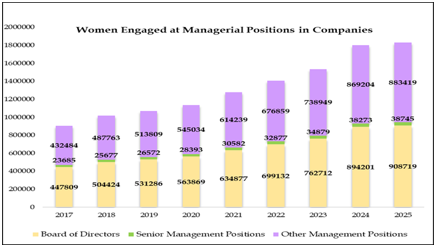
• Leadership and Decision-Making: Women’s representation in managerial positions increased by 102.54% between 2017 and 2025, compared to a 73.80% increase for men during the same period.
• Data Systems and Gender Statistics: The introduction of metadata for 50 indicators has enhanced conceptual clarity, improved methodological transparency, and enabled better interpretation of gender statistics.
• Broader Structural Insights: Gender statistics are increasingly recognised as cross-cutting and essential across sectors such as health, education, economy, and governance, underscoring their importance in holistic development planning.
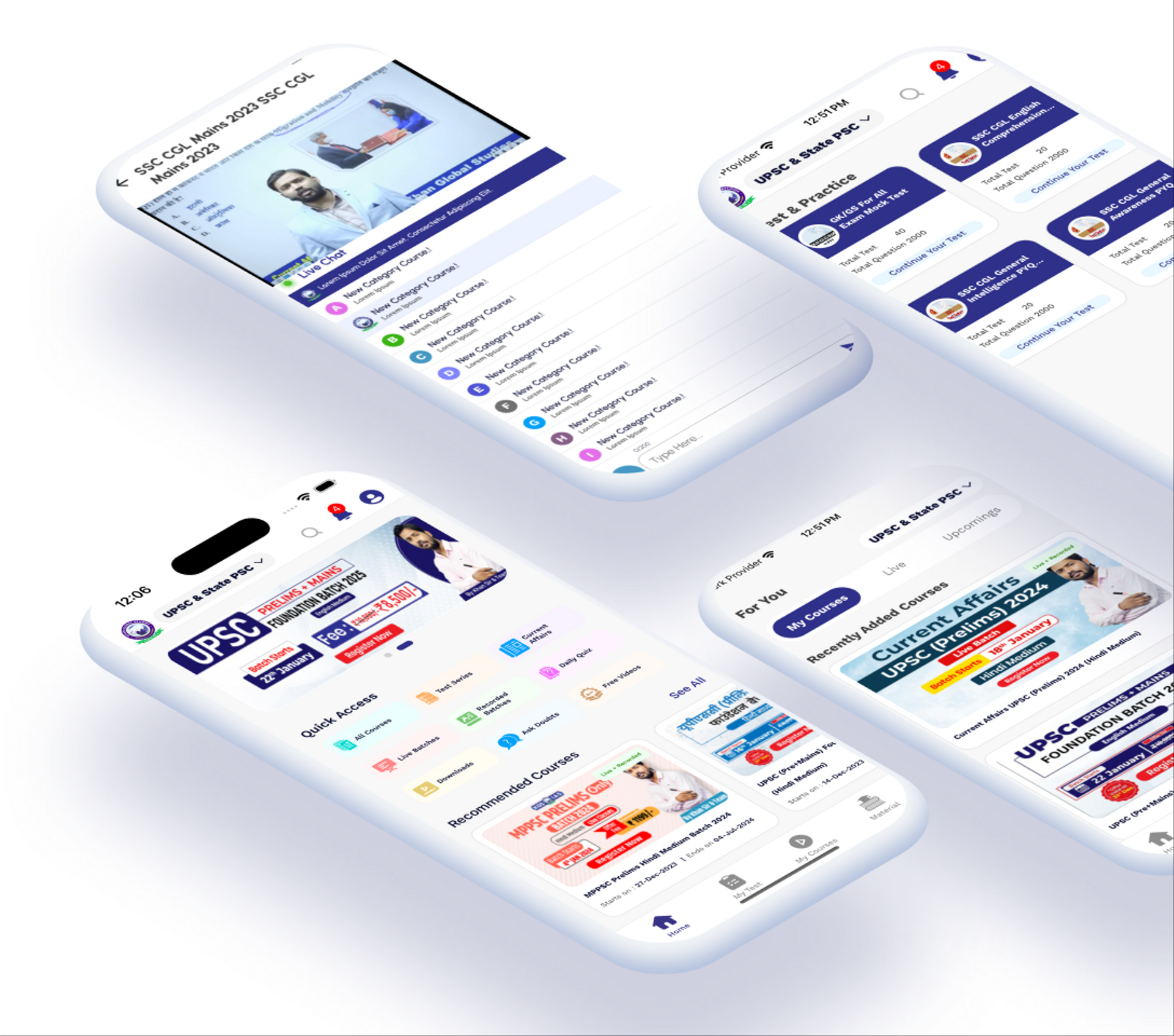
The most trusted learning platform on your phone
With our training programs, learning online can be a very exciting experience! Take the next step toward achieving your professional and personal objectives

Course Related Query:
Ask Your DoubtsStore Related Query:[email protected]NCERT Books
Resources
We love learning. Through our innovative solutions, we encourage ourselves, our teams, and our Students to grow. We welcome and look for diverse perspectives and opinions because they enhance our decisions. We strive to understand the big picture and how we contribute to the company’s objectives. We approach challenges with optimism and harness the power of teamwork to accomplish our goals. These aren’t just pretty words to post on the office wall. This is who we are. It’s how we work. And it’s how we approach every interaction with each other and our Students.
Come with an open mind, hungry to learn, and you’ll experience unmatched personal and professional growth, a world of different backgrounds and perspectives, and the freedom to be you—every day. We strive to build and sustain diverse teams and foster a culture of belonging. Creating an inclusive environment where every students feels welcome, appreciated, and heard gives us something to feel (really) good about.
Get Free academic Counseling & Course Details