You're all caught up—no notifications available.
Explore All Exams at KGS


All Exams
Explore All Exams at KGS

Khan Sir Courses
Geography I Polity I History | World Map I Indian Map I Economics I Biology

UPSC & State PSC
UPSC I BPSC I UP-PSC I MP-PSC

State Exams
UP I Bihar I MP | Rajasthan

NEET | JEE | CUET
NEET | JEE | CUET

Defence Exams
NDA I CDS I CAPF I AFCAT I SSB I Agniveer

Police Exams
UP SI | Bihar SI | Delhi Police | UP Constable

SSC Exams
CGL I CPO I CHSL I MTS I SSC GD I Delhi Police

Foundation Courses
Physics I Chemistry I Biology I History I Geography I Polity I NCERT I Math I English | Map I Reasoning

Railway Exams
RRB | RPF

Teaching Exams
TET | Teaching | UGC

Banking Exams
SBI | RBI | IBPS

Engineering Exams
Civil | Electrical | Mechanical
UGC NET
UGC NET/JRF
Current Affairs provides you with the best compilation of the Daily Current Affairs taking place across the globe: National, International, Sports, Science and Technology, Banking, Economy, Agreement, Appointments, Ranks, and Report and General Studies

SYLLABUS
GS-2: Parliament and State Legislatures—Structure, Functioning, Conduct of Business, Powers & Privileges and Issues Arising out of these.
Context: The PRS has released its Annual Review of State Laws 2025, highlighting the key issues in the functioning of India's State Legislatures.
More on the News
• The report analysed the functioning of 27 State Legislative Assemblies and three Union Territory legislatures (Delhi, Jammu & Kashmir, and Puducherry) during 2025.
• The report examined key legislative functions such as law-making, budget scrutiny, committee oversight, ordinance-making, and mechanisms for executive accountability.
• The findings have reignited concerns about the quality of legislative scrutiny, executive accountability, and the deliberative role of State Legislatures in a federal democracy.
Key Findings of the Report
• Legislative Sittings Remain Low
• More Bills Passed in Less Time
• Weak Committee Scrutiny
• Budget Oversight Remains Limited
• Growing Reliance on Ordinances
• Institutional Concerns
Concerns / Implications
• Declining Deliberative Function: The passage of nearly one-third of Bills on the day of introduction raises concerns about inadequate debate, stakeholder consultation, and informed law-making.
• Weak Legislative Oversight: Fewer sitting days reduce opportunities for Question Hour, discussions, and motions, thereby weakening the Assembly’s role in holding the executive accountable.
• Limited Financial Scrutiny: The practice of passing large portions of budgetary demands without discussion undermines legislative control over public expenditure and fiscal accountability.
• Underutilisation of Committees: Low referral of Bills to Committees diminishes expert scrutiny and evidence-based policy-making, affecting the quality of legislation.
Way Forward
• Increase Sitting Days: States should adopt and adhere to minimum annual sitting-day norms to ensure adequate time for legislative business and public deliberation.
• Strengthen Committee System: Greater referral of Bills to Departmentally Related and Subject Committees can improve legislative scrutiny and policy outcomes.
• Enhance Budget Examination: Legislatures should devote more time to discussing budgetary proposals and expenditure demands to strengthen financial accountability.
• Promote Transparent Law-Making: Wider pre-legislative consultation, publication of draft Bills, and stakeholder engagement can enhance the quality, legitimacy, and inclusiveness of legislation.
Sources :
PRS India
Deccan Herald
New Indian Express
The Wire
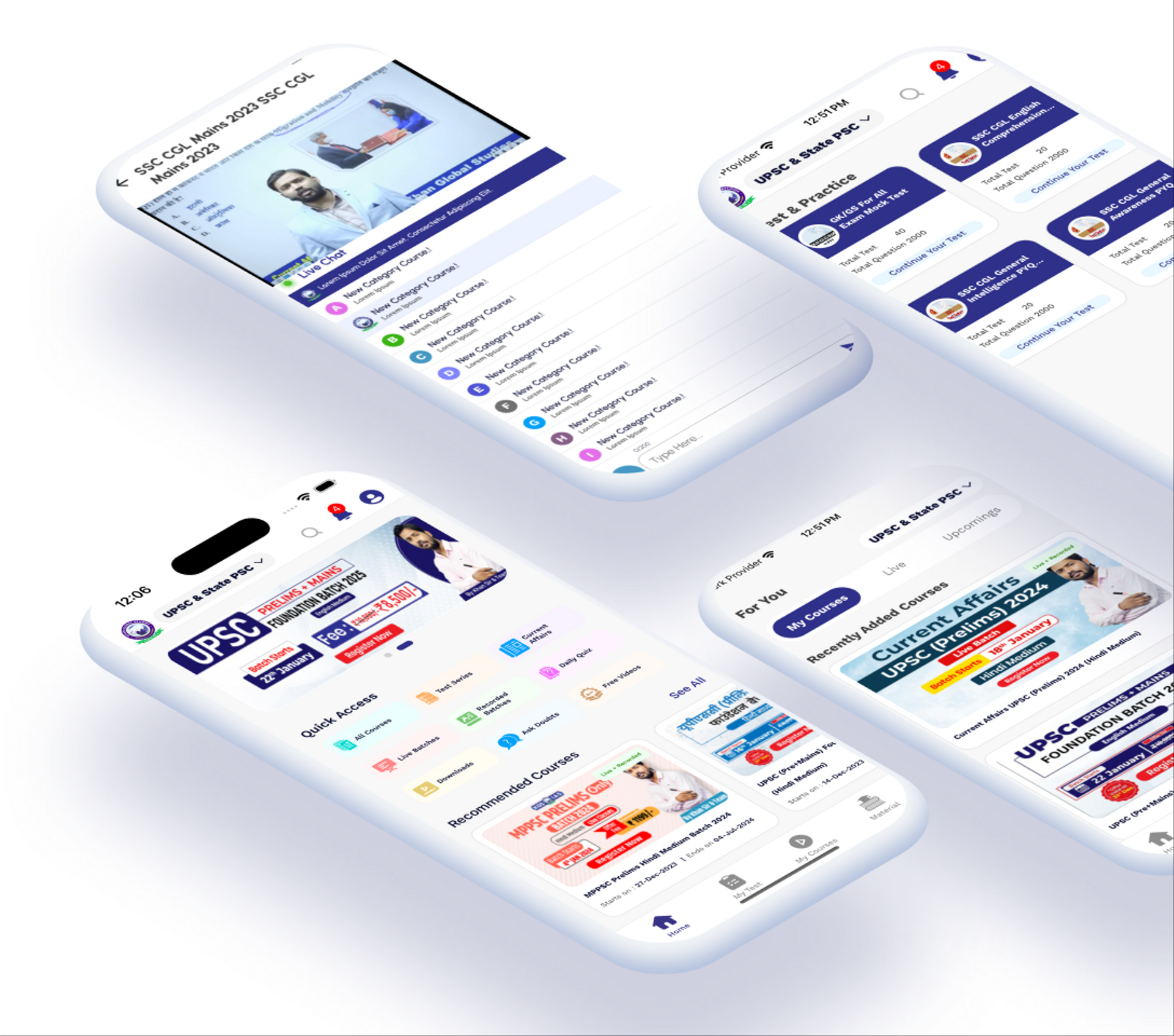
The most trusted learning platform on your phone
With our training programs, learning online can be a very exciting experience! Take the next step toward achieving your professional and personal objectives



Course Related Query:
Ask Your DoubtsStore Related Query:[email protected]NCERT Books
Resources
We love learning. Through our innovative solutions, we encourage ourselves, our teams, and our Students to grow. We welcome and look for diverse perspectives and opinions because they enhance our decisions. We strive to understand the big picture and how we contribute to the company’s objectives. We approach challenges with optimism and harness the power of teamwork to accomplish our goals. These aren’t just pretty words to post on the office wall. This is who we are. It’s how we work. And it’s how we approach every interaction with each other and our Students.
Come with an open mind, hungry to learn, and you’ll experience unmatched personal and professional growth, a world of different backgrounds and perspectives, and the freedom to be you—every day. We strive to build and sustain diverse teams and foster a culture of belonging. Creating an inclusive environment where every students feels welcome, appreciated, and heard gives us something to feel (really) good about.
Get Free academic Counseling & Course Details