You're all caught up—no notifications available.
Explore All Exams at KGS


All Exams
Explore All Exams at KGS

Khan Sir Courses
Geography I Polity I History | World Map I Indian Map I Economics I Biology

UPSC & State PSC
UPSC I BPSC I UP-PSC I MP-PSC

State Exams
UP I Bihar I MP | Rajasthan

NEET | JEE | CUET
NEET | JEE | CUET

Defence Exams
NDA I CDS I CAPF I AFCAT I SSB I Agniveer

Police Exams
UP SI | Bihar SI | Delhi Police | UP Constable

SSC Exams
CGL I CPO I CHSL I MTS I SSC GD I Delhi Police

Foundation Courses
Physics I Chemistry I Biology I History I Geography I Polity I NCERT I Math I English | Map I Reasoning

Railway Exams
RRB | RPF

Teaching Exams
TET | Teaching | UGC

Banking Exams
SBI | RBI | IBPS

Engineering Exams
Civil | Electrical | Mechanical
UGC NET
UGC NET/JRF
Current Affairs provides you with the best compilation of the Daily Current Affairs taking place across the globe: National, International, Sports, Science and Technology, Banking, Economy, Agreement, Appointments, Ranks, and Report and General Studies
SYLLABUS
GS-3: Achievements of Indians in science & technology; indigenization of technology and developing new technology; Awareness in the fields of Space.
Context: Nearly six years after its launch, Chandrayaan-2 has provided fresh evidence suggesting the possible presence of subsurface water ice beneath permanently shadowed regions (PSRs) near the Moon’s south pole.
Key Findings of the Research
• Evidence of Subsurface Ice: Scientists from the Physical Research Laboratory (PRL), Ahmedabad, used Chandrayaan-2’s Dual Frequency Synthetic Aperture Radar (DFSAR) data to investigate lunar south polar regions.
• Study of Doubly Shadowed Craters: The research focused on doubly shadowed craters, located within Permanently Shadowed Regions (PSRs).
• New Radar-Based Ice Detection Criterion: Scientists developed a refined method to identify subsurface ice using Circular Polarization Ratio (CPR) > 1 and Degree of Polarization (DOP) < 0.13.
• Distinguishing Ice from Rocky Terrain: The CPR-DOP criterion helps separate genuine ice signatures from radar reflections caused by rough rocky surfaces, improving the reliability of ice detection.
• Strongest Evidence from Faustini Crater: A 1.1 km diameter crater inside the Faustini crater showed the strongest indications of subsurface ice.
• The crater exhibits:
• Technological Achievement: DFSAR became the first fully polarimetric Synthetic Aperture Radar (SAR) sent to study the Moon.
Significance of the Research
• Improves Understanding of Lunar Polar Volatiles: The findings provide new insights into the distribution and long-term preservation of water ice and other volatile materials in the Moon's polar regions.
• Supports Future Lunar Exploration: The study helps identify potential ice-rich locations suitable for future robotic and human missions to the Moon.
• Enables In-Situ Resource Utilisation (ISRU): Lunar water ice could be utilized to produce drinking water, breathable oxygen, and hydrogen-oxygen rocket fuel for sustained lunar operations.
• Reduces Dependence on Earth-Supplied Resources: The availability of local water resources could significantly reduce the cost and logistical challenges of long-duration lunar missions.
• Strengthens India's Contribution to Lunar Science: The discovery underscores the continued scientific success of Chandrayaan-2 and reinforces India's growing role in global lunar exploration.
• Aids Future South Pole Missions: The findings provide valuable guidance for future missions targeting the Moon's south polar region, including landing site selection and resource exploration.
About Chandrayaan-2
• Chandrayaan-2 was India's second lunar exploration mission launched on 22 July 2019 by the GSLV Mk III-M1 rocket from Satish Dhawan Space Centre, Sriharikota.
• The mission consisted of:
• Major Objectives:
• Mission Outcome: On 7 September 2019, communication with the Vikram lander was lost during the final descent phase.
• Orbiter Orbit: The Chandrayaan-2 Orbiter currently operates in a 100 km × 100 km polar orbit around the Moon.
• Major Orbiter Payloads
Sources :
Indian Express
The Hindu
ISRO
ISRO
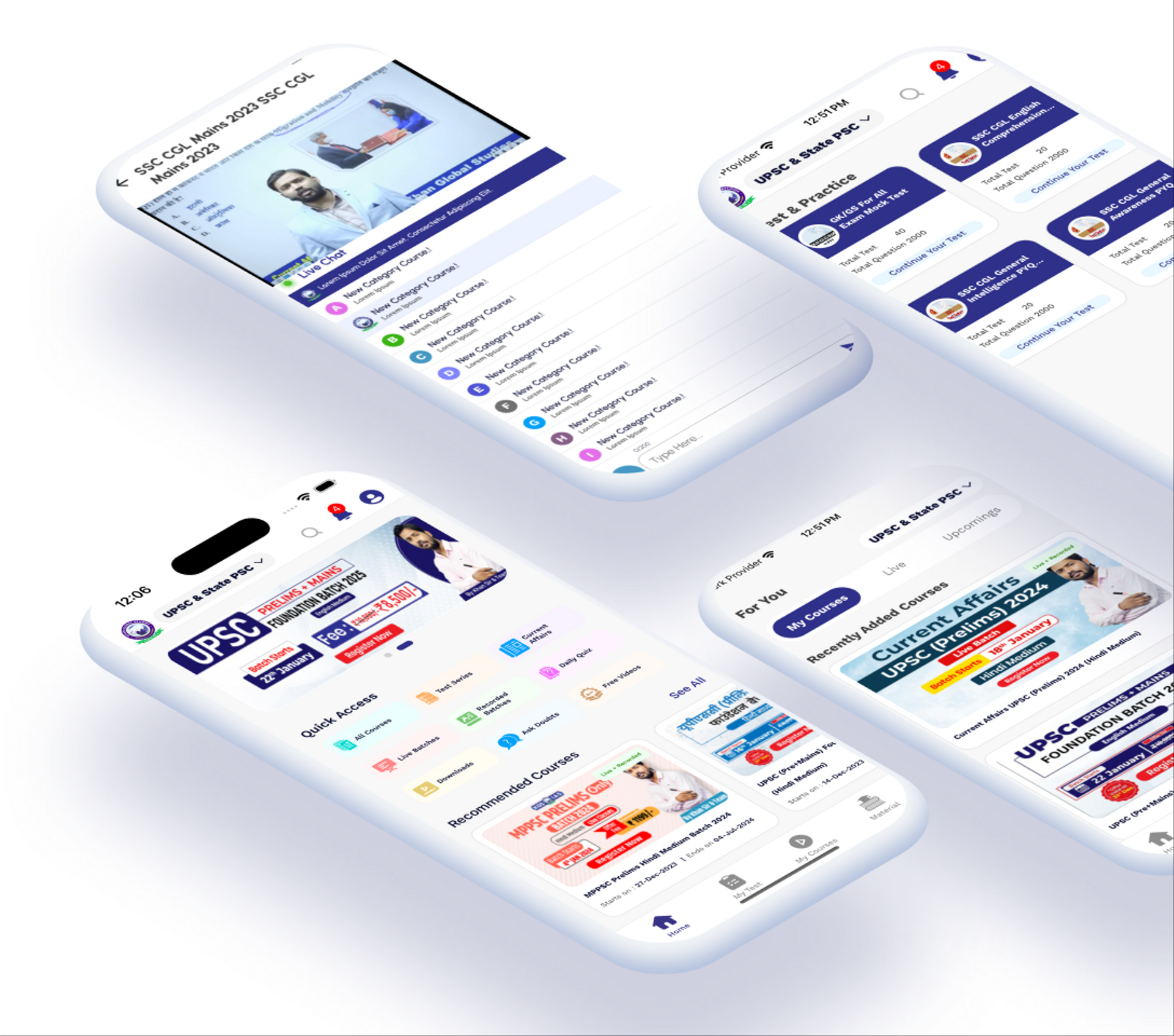
The most trusted learning platform on your phone
With our training programs, learning online can be a very exciting experience! Take the next step toward achieving your professional and personal objectives



Course Related Query:
Ask Your DoubtsStore Related Query:[email protected]NCERT Books
Resources
We love learning. Through our innovative solutions, we encourage ourselves, our teams, and our Students to grow. We welcome and look for diverse perspectives and opinions because they enhance our decisions. We strive to understand the big picture and how we contribute to the company’s objectives. We approach challenges with optimism and harness the power of teamwork to accomplish our goals. These aren’t just pretty words to post on the office wall. This is who we are. It’s how we work. And it’s how we approach every interaction with each other and our Students.
Come with an open mind, hungry to learn, and you’ll experience unmatched personal and professional growth, a world of different backgrounds and perspectives, and the freedom to be you—every day. We strive to build and sustain diverse teams and foster a culture of belonging. Creating an inclusive environment where every students feels welcome, appreciated, and heard gives us something to feel (really) good about.
Get Free academic Counseling & Course Details