You're all caught up—no notifications available.
Explore All Exams at KGS


All Exams
Explore All Exams at KGS

Khan Sir Courses
Geography I Polity I History | World Map I Indian Map I Economics I Biology

UPSC & State PSC
UPSC I BPSC I UP-PSC I MP-PSC

State Exams
UP I Bihar I MP | Rajasthan

NEET | JEE | CUET | Boards
NEET | JEE | CUET | Boards

Defence Exams
NDA I CDS I CAPF I AFCAT I SSB I Agniveer

Police Exams
UP SI | Bihar SI | Delhi Police | UP Constable

SSC Exams
CGL I CPO I CHSL I MTS I SSC GD I Delhi Police

Foundation Courses
Physics I Chemistry I Biology I History I Geography I Polity I NCERT I Math I English | Map I Reasoning

Railway Exams
RRB | RPF

Teaching Exams
TET | Teaching | UGC

Banking Exams
SBI | RBI | IBPS

Engineering Exams
Civil | Electrical | Mechanical
UGC NET
UGC NET/JRF
Current Affairs provides you with the best compilation of the Daily Current Affairs taking place across the globe: National, International, Sports, Science and Technology, Banking, Economy, Agreement, Appointments, Ranks, and Report and General Studies

SYLLABUS
GS-I Prelims: Current events of national and international importance.
GS-3: Issues relating to the development and management of Social Sector/Services relating to Health.
Context: The World Health Organisation has certified Denmark as the first European Union (EU) country to eliminate mother-to-child transmission (EMTCT) of HIV and syphilis through sustained maternal health interventions.
More on the News
• The validation followed assessment by the WHO Regional Validation Committee in June 2025 and the Global Validation Advisory Committee in August 2025.
• The certification confirms that Denmark met all required global targets between 2021 and 2024.
• The country maintained very low transmission rates and ensured high coverage of prenatal testing and treatment for pregnant women.
• The WHO defines elimination as testing and treating at least 95% of pregnant women and keeping new infant infections below fifty per one lakh births.
• Denmark achieved this milestone through universal health coverage, strong antenatal care, reliable laboratory systems and rights-based maternal health policies.
• Denmark is now working towards triple elimination by adding hepatitis B to HIV and syphilis elimination targets.
• Denmark joins 22 other countries and territories validated by WHO for the elimination of mother-to-child transmission of HIV, syphilis or hepatitis B virus, or certified on the path to elimination.
About EMTCT of HIV and Syphilis
• In 2014, the World Health Organisation released the first edition of Global Guidance on Criteria and Processes for Validation: Elimination of Mother-to-Child Transmission (EMTCT) of HIV and Syphilis.
• In 2015, the Global Validation Advisory Committee (GVAC) for EMTCT was established, enabling Member States to apply for validation after achieving elimination targets.
• Countries can be validated for EMTCT of HIV and/or syphilis when mother-to-child transmission is reduced to levels where these diseases are no longer considered a public health threat.
• In 2021, the WHO updated its guidance under the Triple Elimination framework to include validation criteria for elimination of mother-to-child transmission (EMTCT) of hepatitis B virus (HBV), allowing Member States to seek validation for the Triple Elimination of HIV, syphilis, and HBV.
About Human immunodeficiency virus (HIV)
• Human immunodeficiency virus (HIV) attacks the immune system, particularly CD4+ T cells, gradually weakening the body’s defences against infections.
• Acquired Immunodeficiency Syndrome (AIDS) is the most advanced stage of HIV infection.
• HIV spreads through infected body fluids such as blood, breast milk, semen and vaginal secretions.
• HIV can also be transmitted from mother to child during pregnancy, delivery or breastfeeding.
• HIV is not transmitted through casual contact such as hugging, shaking hands or sharing food.
• There is no cure for HIV, but antiretroviral therapy (ART) enables people to live near-normal life expectancy when sustained.
• HIV can be diagnosed through rapid diagnostic tests and confirmatory testing under national algorithms.
About Syphilis
• Syphilis is a sexually transmitted infection (STI) caused by bacteria (Treponema pallidum) and spreads through vaginal, anal, or oral sexual contact with an infected person.
• It is treatable with antibiotics; however, if left untreated, syphilis can lead to severe complications such as blindness and damage to the brain, heart, eyes, and nervous system.
About Hepatitis B
• Hepatitis B is an infection of the liver caused by the hepatitis B virus. The infection can be acute (short and severe) or chronic (long-term).
• It can spread through contact with infected body fluids like blood, saliva, vaginal fluids and semen. It can also be passed from a mother to her baby.
• Hepatitis B can be prevented with a safe and effective vaccine. The vaccine is usually given soon after birth, with boosters a few weeks later. It offers nearly complete protection against the virus.
Source:
WHO
WHO
Cleveland Clinic
WHO
WHO
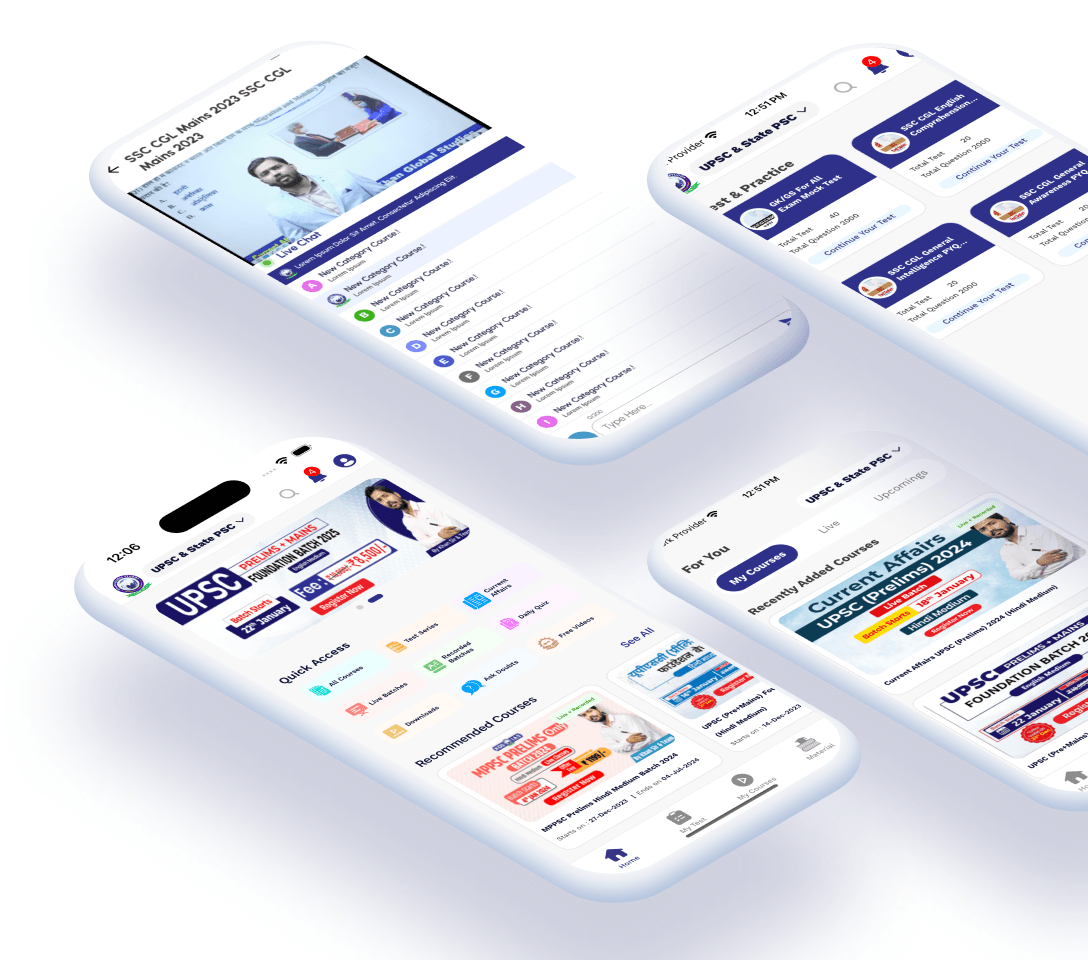
The most trusted learning platform on your phone
With our training programs, learning online can be a very exciting experience! Take the next step toward achieving your professional and personal objectives



Course Related Query:
Ask Your DoubtsStore Related Query:[email protected]NCERT Books
Resources
We love learning. Through our innovative solutions, we encourage ourselves, our teams, and our Students to grow. We welcome and look for diverse perspectives and opinions because they enhance our decisions. We strive to understand the big picture and how we contribute to the company’s objectives. We approach challenges with optimism and harness the power of teamwork to accomplish our goals. These aren’t just pretty words to post on the office wall. This is who we are. It’s how we work. And it’s how we approach every interaction with each other and our Students.
Come with an open mind, hungry to learn, and you’ll experience unmatched personal and professional growth, a world of different backgrounds and perspectives, and the freedom to be you—every day. We strive to build and sustain diverse teams and foster a culture of belonging. Creating an inclusive environment where every students feels welcome, appreciated, and heard gives us something to feel (really) good about.
Get Free academic Counseling & Course Details