You're all caught up—no notifications available.
Explore All Exams at KGS


All Exams
Explore All Exams at KGS

Khan Sir Courses
Geography I Polity I History | World Map I Indian Map I Economics I Biology

UPSC & State PSC
UPSC I BPSC I UP-PSC I MP-PSC

State Exams
UP I Bihar I MP | Rajasthan

NEET | JEE | CUET
NEET | JEE | CUET

Defence Exams
NDA I CDS I CAPF I AFCAT I SSB I Agniveer

Police Exams
UP SI | Bihar SI | Delhi Police | UP Constable

SSC Exams
CGL I CPO I CHSL I MTS I SSC GD I Delhi Police

Foundation Courses
Physics I Chemistry I Biology I History I Geography I Polity I NCERT I Math I English | Map I Reasoning

Railway Exams
RRB | RPF

Teaching Exams
TET | Teaching | UGC

Banking Exams
SBI | RBI | IBPS

Engineering Exams
Civil | Electrical | Mechanical
UGC NET
UGC NET/JRF
Current Affairs provides you with the best compilation of the Daily Current Affairs taking place across the globe: National, International, Sports, Science and Technology, Banking, Economy, Agreement, Appointments, Ranks, and Report and General Studies
SYLLABUS
GS-3: Important Geophysical phenomena such as earthquakes, Tsunami, Volcanic activity, cyclone etc., geographical features and their location-changes in critical geographical features (including water-bodies and ice-caps) and in flora and fauna and the effects of such changes.
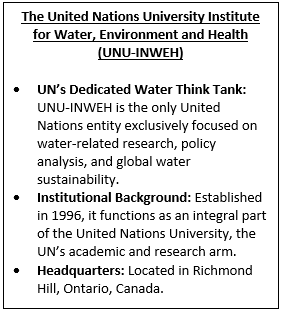
Context: United Nations University Institute for Water, Environment and Health released a report titled as “Global Water Bankruptcy: Living Beyond Our Hydrological Means in the Post-Crisis Era”, highlighting irreversible water “bankruptcy” due to decades of overuse, pollution, and declining freshwater sources.
Key highlights of the Report
• This report declares that the world has already entered the era of Global Water Bankruptcy. The condition is not a distant threat but a present reality.
• Nearly 75% of the global population lives in water-insecure or critically water-insecure countries.
• Around 4 billion people face severe water scarcity for at least one month annually.
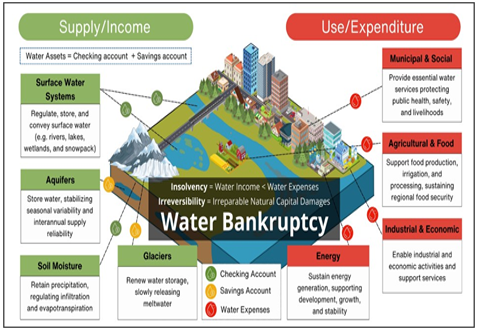
• Decades of unsustainable extraction have depleted aquifers, glaciers, wetlands, soils, and river systems.
• Water systems are described as being in a “post-crisis state of failure.”
• Over 170 million hectares of irrigated cropland face high to very high water stress.
• Annual global economic losses exceed $300 billion due to land degradation, groundwater depletion, and climate change.
• Three billion people and over half of global food production are located in regions with declining water storage.
• Salinisation has degraded more than 100 million hectares of cropland.
• Researchers call for a new global water agenda, focusing on damage minimisation rather than restoring past norms.
• Major hotspots of Water Bankruptcy:
Key Causes of Water Bankruptcy
Significance of the Report
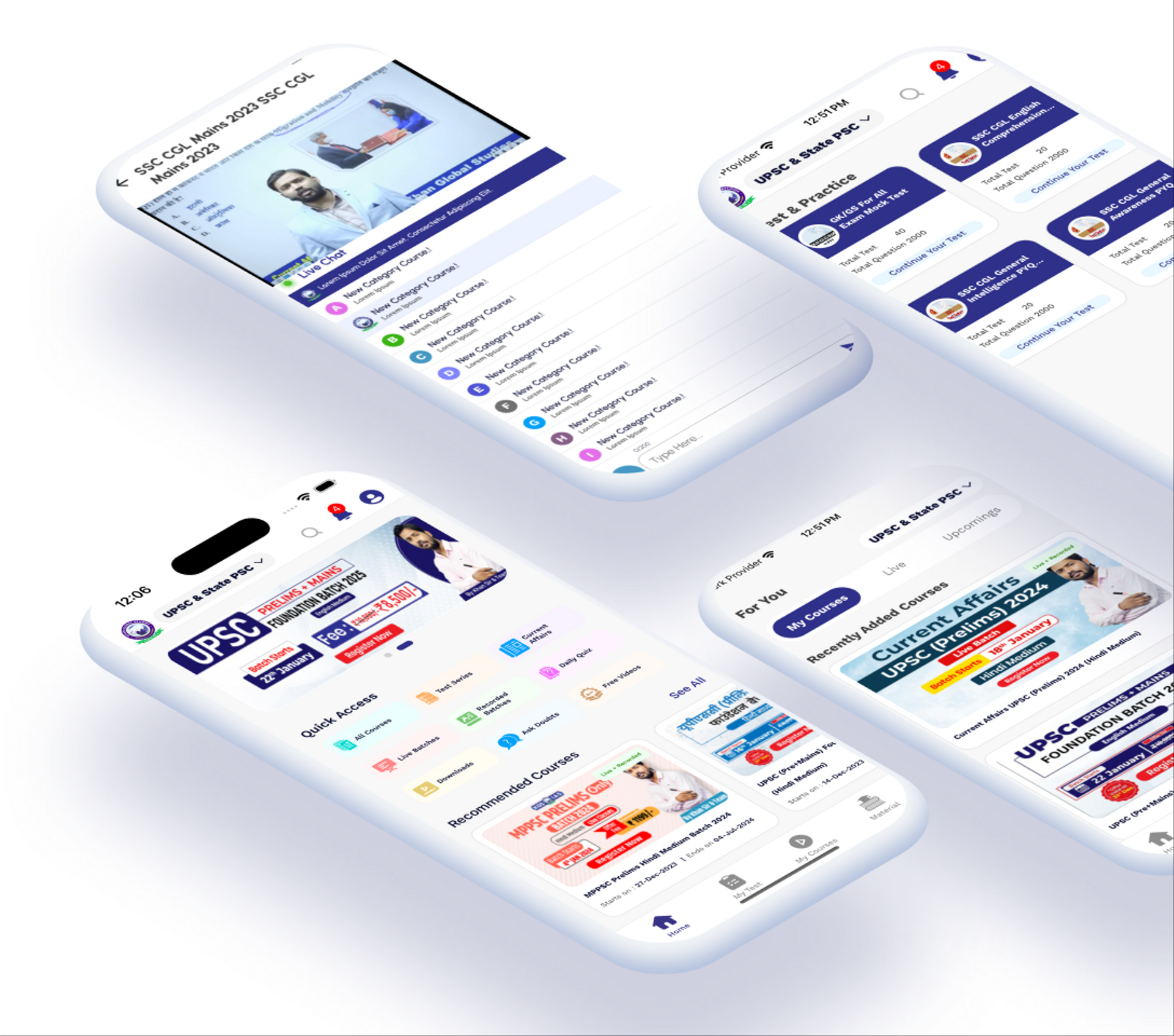
The most trusted learning platform on your phone
With our training programs, learning online can be a very exciting experience! Take the next step toward achieving your professional and personal objectives


Course Related Query:
Ask Your DoubtsStore Related Query:[email protected]NCERT Books
Resources
We love learning. Through our innovative solutions, we encourage ourselves, our teams, and our Students to grow. We welcome and look for diverse perspectives and opinions because they enhance our decisions. We strive to understand the big picture and how we contribute to the company’s objectives. We approach challenges with optimism and harness the power of teamwork to accomplish our goals. These aren’t just pretty words to post on the office wall. This is who we are. It’s how we work. And it’s how we approach every interaction with each other and our Students.
Come with an open mind, hungry to learn, and you’ll experience unmatched personal and professional growth, a world of different backgrounds and perspectives, and the freedom to be you—every day. We strive to build and sustain diverse teams and foster a culture of belonging. Creating an inclusive environment where every students feels welcome, appreciated, and heard gives us something to feel (really) good about.
Get Free academic Counseling & Course Details