You're all caught up—no notifications available.
Explore All Exams at KGS


All Exams
Explore All Exams at KGS

Khan Sir Courses
Geography I Polity I History | World Map I Indian Map I Economics I Biology

UPSC & State PSC
UPSC I BPSC I UP-PSC I MP-PSC

State Exams
UP I Bihar I MP | Rajasthan

NEET | JEE | CUET | Boards
NEET | JEE | CUET | Boards

Defence Exams
NDA I CDS I CAPF I AFCAT I SSB I Agniveer

Police Exams
UP SI | Bihar SI | Delhi Police | UP Constable

SSC Exams
CGL I CPO I CHSL I MTS I SSC GD I Delhi Police

Foundation Courses
Physics I Chemistry I Biology I History I Geography I Polity I NCERT I Math I English | Map I Reasoning

Railway Exams
RRB | RPF

Teaching Exams
TET | Teaching | UGC

Banking Exams
SBI | RBI | IBPS

Engineering Exams
Civil | Electrical | Mechanical
UGC NET
UGC NET/JRF
Current Affairs provides you with the best compilation of the Daily Current Affairs taking place across the globe: National, International, Sports, Science and Technology, Banking, Economy, Agreement, Appointments, Ranks, and Report and General Studies

SYLLABUS
GS-2: Issues relating to development and management of Social Sector/Services relating to Health.
Context: The World Obesity Atlas 2026 highlights a sharp rise in childhood obesity and overweight prevalence in India and across the globe and warns of major health risks if preventive measures are not strengthened.
More on the News
• The World Obesity Federation released the World Obesity Atlas 2026 on World Obesity Day.
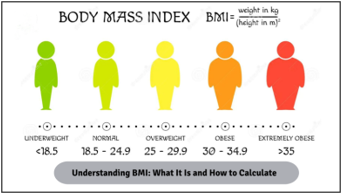
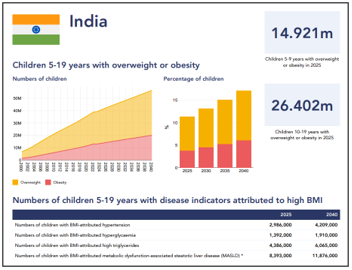
• The report shows that India ranks second globally after China in the number of children with high Body Mass Index (BMI).
• The report estimates that about 41 million children in India had high BMI, and around 14 million children were living with obesity in 2025.
• The study warns that the rapid increase in childhood obesity may lead to a significant rise in non-communicable diseases in the coming decades.
• The Report further adds that many countries, including India, remain off track in achieving the global target to halt the rise in childhood obesity by 2030.
Key Findings of the Report
• India and Global Scenario:
• Health Risks and Future Projections:
Metabolically-dysfunction-associated steatotic liver disease (MASLD), formerly known as non-alcoholic fatty liver disease (NAFLD), is a common, often silent chronic liver condition characterized by excessive fat accumulation in the liver (>5% steatosis) associated with metabolic risk factors like obesity, type 2 diabetes, or high cholesterol.
• Causes and Risk Factors:
Suggested Policy Measures
• Governments need to strengthen preventive policies to address childhood obesity at an early stage.
• Fiscal measures such as taxes on sugar-sweetened beverages can help discourage unhealthy dietary habits.
• Restrictions on the marketing of unhealthy food products to children should be implemented more strictly.
• Improved school nutrition standards and healthier food environments should be promoted across educational institutions.
• Early screening and treatment through primary healthcare systems can help reduce long term health risks.
Source:
The Hindu
Indian Express

India Gets New Batch of Cheetahs From Botswana
Finland President’s State Visit to India
World Obesity Atlas 2026
The most trusted learning platform on your phone
With our training programs, learning online can be a very exciting experience! Take the next step toward achieving your professional and personal objectives


Course Related Query:
Ask Your DoubtsStore Related Query:[email protected]NCERT Books
Resources
We love learning. Through our innovative solutions, we encourage ourselves, our teams, and our Students to grow. We welcome and look for diverse perspectives and opinions because they enhance our decisions. We strive to understand the big picture and how we contribute to the company’s objectives. We approach challenges with optimism and harness the power of teamwork to accomplish our goals. These aren’t just pretty words to post on the office wall. This is who we are. It’s how we work. And it’s how we approach every interaction with each other and our Students.
Come with an open mind, hungry to learn, and you’ll experience unmatched personal and professional growth, a world of different backgrounds and perspectives, and the freedom to be you—every day. We strive to build and sustain diverse teams and foster a culture of belonging. Creating an inclusive environment where every students feels welcome, appreciated, and heard gives us something to feel (really) good about.
Get Free academic Counseling & Course Details