You're all caught up—no notifications available.
Explore All Exams at KGS


All Exams
Explore All Exams at KGS

Khan Sir Courses
Geography I Polity I History | World Map I Indian Map I Economics I Biology

UPSC & State PSC
UPSC I BPSC I UP-PSC I MP-PSC

State Exams
UP I Bihar I MP | Rajasthan

NEET | JEE | CUET
NEET | JEE | CUET

Defence Exams
NDA I CDS I CAPF I AFCAT I SSB I Agniveer

Police Exams
UP SI | Bihar SI | Delhi Police | UP Constable

SSC Exams
CGL I CPO I CHSL I MTS I SSC GD I Delhi Police

Foundation Courses
Physics I Chemistry I Biology I History I Geography I Polity I NCERT I Math I English | Map I Reasoning

Railway Exams
RRB | RPF

Teaching Exams
TET | Teaching | UGC

Banking Exams
SBI | RBI | IBPS

Engineering Exams
Civil | Electrical | Mechanical
UGC NET
UGC NET/JRF
Current Affairs provides you with the best compilation of the Daily Current Affairs taking place across the globe: National, International, Sports, Science and Technology, Banking, Economy, Agreement, Appointments, Ranks, and Report and General Studies

SYLLABUS
GS-2: Issues relating to development and management of Social Sector/Services relating to Health; functioning of the Executive and the Judiciary.
Context: Recently, the Supreme Court of India directed the Union government to formulate a “no-fault” compensation policy for serious COVID-19 vaccine-related injuries and deaths.
More on the News
• The direction was issued to the Ministry of Health and Family Welfare in response to petitions seeking compensation for deaths linked to After Effects From Immunisation’ (AEFI).
• The court observed that India does not currently have a uniform and structured mechanism to compensate individuals who suffer serious adverse effects after vaccination.
• The court noted that vaccination programmes are undertaken as public health measures by the State; therefore, mechanisms for redress and compensation are necessary.
Supreme Court’s Observations
• The court stated that no-fault vaccine injury compensation schemes are a recognised feature of welfare state responses in many countries.
• The court explained that the principle of no-fault liability allows swift compensation to victims without requiring a prolonged investigation into responsibility or negligence.
• The judgment relied on Article 21, affirming that the right to life includes the right to health, and held that State–citizen relations extend beyond fault-based liability, requiring the State to act as an active guardian of welfare, dignity, and public health under constitutional principles.
Data on Adverse Events Following Immunisation
• Government data shows that about 219.86 crore doses of COVID-19 vaccines were administered in India until November 2022.
• The total number of reported AEFI cases was 92,114, which represents about 0.0042% of total vaccinations.
• The majority of reported cases, about 89,332 (0.0041%), were minor adverse events.
• The number of serious and severe adverse events was 2,782, which represents about 0.00013% of total vaccinations.
• The total number of deaths reported in connection with adverse events following immunisation was 1,171.
Significance of the Judgment
• Strengthens Right to Health: The judgment reinforces the interpretation of Article 21 of the Constitution of India by affirming that the right to life includes the right to health and protection from vaccine-related harm.
• Promotes Welfare State Responsibility: It emphasises that when the State undertakes large-scale public health programmes such as vaccination, it must also ensure fair compensation mechanisms for rare adverse outcomes.
• Encourages Institutional Reform: The direction to frame a no-fault compensation policy could lead to the establishment of a structured national framework for vaccine injury compensation, improving public health governance.
• Enhances Public Trust in Vaccination: A transparent and predictable compensation mechanism may increase public confidence in vaccination programmes and future public health interventions.
India's COVID-19 vaccination drive
• As of 4 March 2023, MoHFW data show that roughly 74% of India’s total population had received at least one COVID 19 vaccine dose and about 69% were fully vaccinated, with coverage significantly higher among the eligible 12+ population.
• India has authorised a variety of vaccines, ranging from locally developed to internationally licensed options:
Source :
The Hindu
Times of India

ISRO Conducts Sea-Level Test of Cryogenic Engine
SC Orders a No-Fault Compensation Policy for COVID-19 Vaccine
Trends in International Arms Transfers 2025
Global Conference on Women in Agri-Food Systems (GCWAS–2026)
Transgender Persons (Protection of Rights) Amendment Bill, 2026
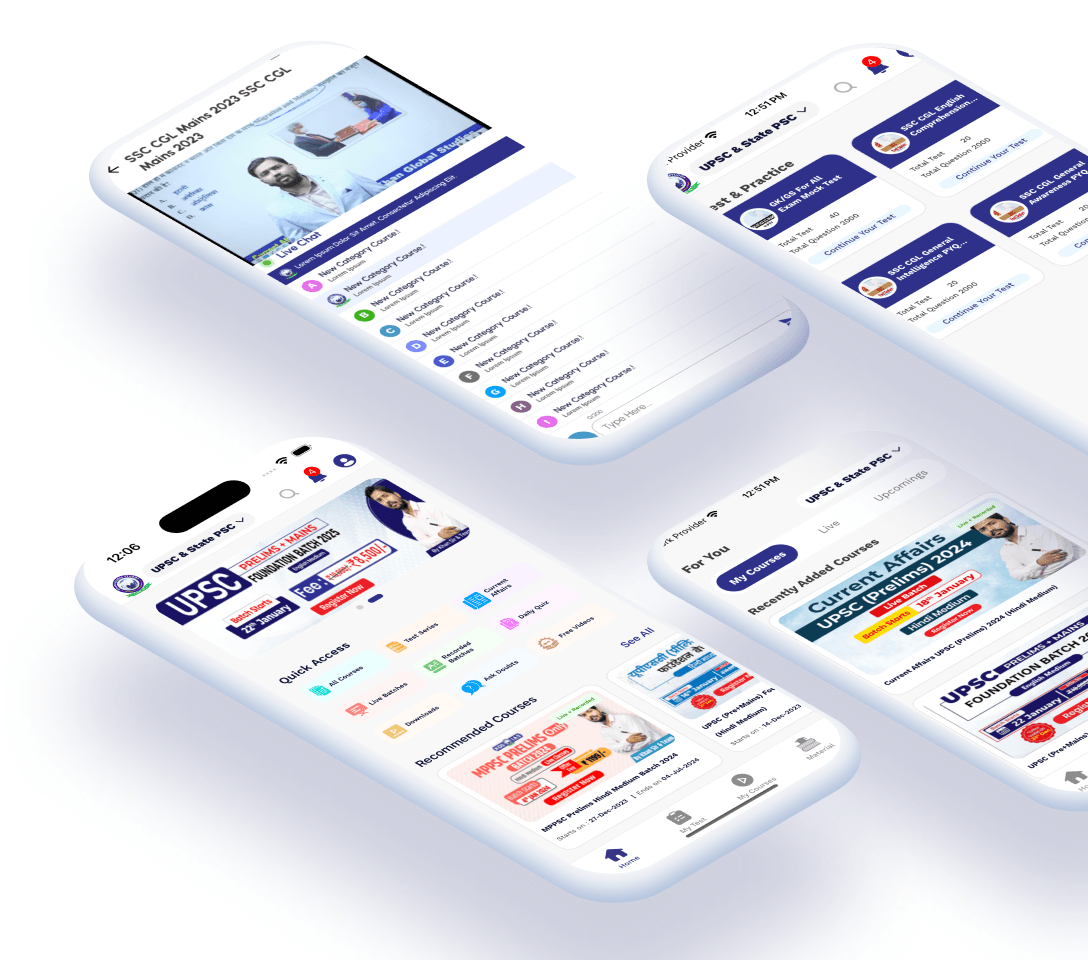
The most trusted learning platform on your phone
With our training programs, learning online can be a very exciting experience! Take the next step toward achieving your professional and personal objectives



Course Related Query:
Ask Your DoubtsStore Related Query:[email protected]NCERT Books
Resources
We love learning. Through our innovative solutions, we encourage ourselves, our teams, and our Students to grow. We welcome and look for diverse perspectives and opinions because they enhance our decisions. We strive to understand the big picture and how we contribute to the company’s objectives. We approach challenges with optimism and harness the power of teamwork to accomplish our goals. These aren’t just pretty words to post on the office wall. This is who we are. It’s how we work. And it’s how we approach every interaction with each other and our Students.
Come with an open mind, hungry to learn, and you’ll experience unmatched personal and professional growth, a world of different backgrounds and perspectives, and the freedom to be you—every day. We strive to build and sustain diverse teams and foster a culture of belonging. Creating an inclusive environment where every students feels welcome, appreciated, and heard gives us something to feel (really) good about.
Get Free academic Counseling & Course Details