You're all caught up—no notifications available.
Explore All Exams at KGS


All Exams
Explore All Exams at KGS

Khan Sir Courses
Geography I Polity I History | World Map I Indian Map I Economics I Biology

UPSC & State PSC
UPSC I BPSC I UP-PSC I MP-PSC

State Exams
UP I Bihar I MP | Rajasthan

NEET | JEE | CUET
NEET | JEE | CUET

Defence Exams
NDA I CDS I CAPF I AFCAT I SSB I Agniveer

Police Exams
UP SI | Bihar SI | Delhi Police | UP Constable

SSC Exams
CGL I CPO I CHSL I MTS I SSC GD I Delhi Police

Foundation Courses
Physics I Chemistry I Biology I History I Geography I Polity I NCERT I Math I English | Map I Reasoning

Railway Exams
RRB | RPF

Teaching Exams
TET | Teaching | UGC

Banking Exams
SBI | RBI | IBPS

Engineering Exams
Civil | Electrical | Mechanical
UGC NET
UGC NET/JRF
Current Affairs provides you with the best compilation of the Daily Current Affairs taking place across the globe: National, International, Sports, Science and Technology, Banking, Economy, Agreement, Appointments, Ranks, and Report and General Studies

SYLLABUS
GS-2: Welfare schemes for vulnerable sections of the population by the Centre and States and the performance of these schemes.
Context: Recently, the Transgender Persons (Protection of Rights) Amendment Bill, 2026, was introduced in the Lok Sabha by the Union Minister for Social Justice and Empowerment.
More on the News
• The Bill proposes major changes to the Transgender Persons (Protection of Rights) Act, 2019, including a redefinition of “transgender person”, changes to the procedure for recognition of gender identity, and the introduction of stricter penal provisions for offences against transgender persons.
• The amendment seeks to clarify the legal definition of transgender persons and address difficulties faced in implementing the 2019 Act.
• According to the government, the existing definition is vague and broad, making it difficult to identify the intended beneficiaries of the Act.
• The government stated that the law was intended to protect individuals who face severe social exclusion due to biological reasons, rather than all persons with self-perceived gender identities or gender fluidity.
Key Features of the Amendment
• Revised Definition of “Transgender Person”: The Bill proposes a narrower definition of transgender persons. It includes:
• Removal of Right to Self-Perceived Gender Identity: The Bill proposes to omit Section 4(2) of the 2019 Act.
• Medical Board for Gender Recognition: A medical board headed by a Chief Medical Officer or Deputy Chief Medical Officer will recommend whether a person qualifies as transgender.
• Changes in Procedure after Gender Reassignment Surgery: Medical institutions performing sex reassignment surgery (SRS) must report details to the District Magistrate and designated authorities.
• Changes in Official Documentation: A person recognised as transgender under the amended law may change their first name in birth certificates and other identity documents.
• Reconstitution of the National Council for Transgender Persons: Representatives of States and Union Territories will be nominated by the Central Government on a rotational regional basis (North, South, East, West and North-East).
• New Penal Provisions: The amendment proposes specific offences with graded punishments, including forcing a person to assume a transgender identity through mutilation, emasculation, castration and chemical or hormonal procedures
• Punishments include: 10 years to life imprisonment with a minimum fine of ₹2 lakh for offences against adults. Up to life imprisonment with a minimum fine of ₹5 lakh when the victim is a child.
• Other offences include kidnapping or abduction of transgender persons, forcing transgender persons into begging, bonded labour, or servitude, and compelling children to present themselves as transgender.
Concerns
• Violation of the NALSA Judgment: Critics argue that removing the right to self-perceived gender identity contradicts the 2014 Supreme Court judgment in the NALSA v. Union of India case, which held that self-determination of gender is part of personal liberty under Article 21 of the Constitution.
• Narrow and Exclusionary Definition: Activists argue that the new definition excludes many individuals, such as trans men, non-binary persons, and gender-fluid individuals.
• Medicalisation of Gender Identity: Requiring approval from a medical board is seen as a return to earlier proposals that were criticised for violating bodily autonomy and personal liberty.
• Lack of Consultation: Community leaders have claimed that the amendments were introduced without consultation with transgender communities.
• Risk of Increased Discrimination: Critics warn that narrowing the definition could exclude many transgender individuals from legal recognition, welfare schemes, and legal protections.

ISRO Conducts Sea-Level Test of Cryogenic Engine
SC Orders a No-Fault Compensation Policy for COVID-19 Vaccine
Trends in International Arms Transfers 2025
Global Conference on Women in Agri-Food Systems (GCWAS–2026)
Transgender Persons (Protection of Rights) Amendment Bill, 2026
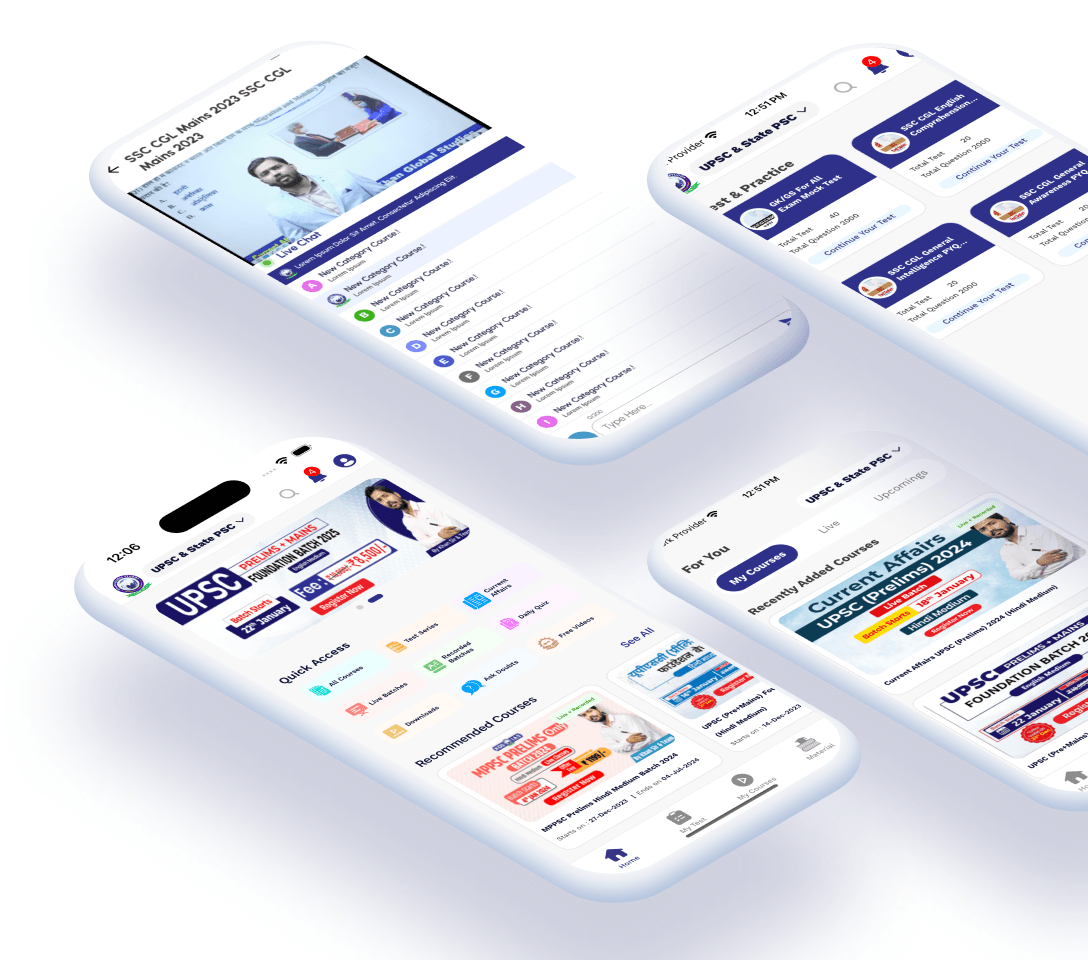
The most trusted learning platform on your phone
With our training programs, learning online can be a very exciting experience! Take the next step toward achieving your professional and personal objectives



Course Related Query:
Ask Your DoubtsStore Related Query:[email protected]NCERT Books
Resources
We love learning. Through our innovative solutions, we encourage ourselves, our teams, and our Students to grow. We welcome and look for diverse perspectives and opinions because they enhance our decisions. We strive to understand the big picture and how we contribute to the company’s objectives. We approach challenges with optimism and harness the power of teamwork to accomplish our goals. These aren’t just pretty words to post on the office wall. This is who we are. It’s how we work. And it’s how we approach every interaction with each other and our Students.
Come with an open mind, hungry to learn, and you’ll experience unmatched personal and professional growth, a world of different backgrounds and perspectives, and the freedom to be you—every day. We strive to build and sustain diverse teams and foster a culture of belonging. Creating an inclusive environment where every students feels welcome, appreciated, and heard gives us something to feel (really) good about.
Get Free academic Counseling & Course Details